Sleep Apnea VA Claim: How Veterans Pursue Service Connection and a Fair Rating
Quick Answer: A sleep apnea VA claim asks the VA to link your diagnosed sleep apnea to your military service, either directly or as a secondary condition. Success usually rests on a current diagnosis from a sleep study, an in-service event or connected condition, and a medical opinion tying the two together.
Featured Book

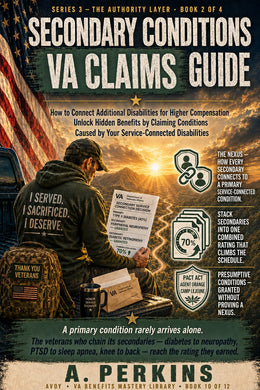
Secondary Conditions VA Claims Guide — part of the avoy VA Benefits Mastery Library by A. Perkins. Get the book →
Why Veterans Ask This Question
Sleep apnea is one of the most searched topics among veterans, and for good reason. Many service members spent years going to bed exhausted, waking up gasping, or being told by a bunkmate that they stopped breathing in their sleep. Back then, nobody called it sleep apnea. It was just part of the grind. Years later, a doctor orders a sleep study, hands you a CPAP machine, and suddenly you have a diagnosis with a name. The natural next question is simple: is this connected to my service, and can I file a sleep apnea VA claim?
The interest is not only about a label. Sleep apnea can carry a meaningful disability rating, and it often ties into other conditions veterans already live with, such as PTSD, weight gain from a service-connected injury, or sinus and breathing problems. When a veteran realizes their sleep apnea might connect to service, they are really asking whether years of poor sleep, fatigue, and health strain can finally be recognized. That is a fair and important question, and it deserves a clear, honest, educational answer rather than hype.
At avoy, we hear this question constantly. Veterans want to know where to start, what evidence matters, and how to avoid the traps that sink otherwise solid claims. This guide walks through the educational fundamentals so you can approach your claim with a clear head and realistic expectations.
Understanding The Topic
Sleep apnea is a condition where your breathing repeatedly stops and starts while you sleep. The most common form, obstructive sleep apnea, happens when the airway collapses or gets blocked during sleep. The result is fragmented rest, low oxygen, loud snoring, and daytime exhaustion. It is usually confirmed through a sleep study, either in a lab or with an approved at-home test, which measures how often your breathing is interrupted each hour.
For VA purposes, sleep apnea is evaluated under the respiratory rating rules, using diagnostic code 6847. The rating schedule generally looks at how severe the condition is and what treatment it requires. In broad educational terms, a documented sleep disorder with no major symptoms tends to sit at the low end, persistent daytime sleepiness sits higher, needing a breathing assistance device such as a CPAP machine sits higher still, and the most severe cases involving chronic respiratory failure or a tracheostomy sit at the top. Because the VA has considered updates to how sleep-related conditions are rated, you should confirm the current rating criteria and percentages directly on VA.gov before relying on any specific number. avoy does not invent figures, and neither should you.
There are two main routes to service connection for sleep apnea. The direct route argues that your sleep apnea began during service or was documented while you served. The secondary route argues that your sleep apnea was caused or made worse by another service-connected condition, such as PTSD, a nasal or sinus condition, or weight gain driven by a service-connected orthopedic injury. Both routes are legitimate, and which one fits depends entirely on your individual history and medical records.
What The VA Generally Looks For
Every service connection claim, including sleep apnea, generally rests on three building blocks. Understanding these three pieces is the single most useful thing you can do before you file.
First, the VA looks for a current diagnosis. For sleep apnea, that almost always means a sleep study confirming the condition. A prescription for a CPAP machine or a note that you snore is not the same as a formal diagnosis. The VA wants to see the objective test result in your records.
Second, the VA looks for an in-service event, injury, illness, or a service-connected condition to link to. On the direct route, this could be documented complaints of fatigue, choking or gasping at night, buddy statements describing your snoring during service, or a diagnosis made while you were still in uniform. On the secondary route, this is the already service-connected condition that caused or aggravated your sleep apnea.
Third, the VA looks for a medical nexus, which is a link connecting the first two pieces. This is usually a medical opinion from a qualified provider explaining why your sleep apnea is at least as likely as not related to your service or to a service-connected condition. The phrase at least as likely as not reflects the standard of proof the VA uses, and a clear, well-reasoned nexus opinion is often what separates a granted claim from a denied one.
When these three building blocks line up and are supported by documents rather than assumptions, a sleep apnea claim rests on solid ground. When one of them is missing or weak, that is usually where problems begin.
Common Mistakes Veterans Make
The most common mistake is filing without a formal diagnosis. Some veterans file the moment they suspect sleep apnea, before a sleep study confirms it. Without that objective test in the file, the claim is missing its foundation. Get the diagnosis documented first.
A second frequent mistake is assuming the connection is obvious. Veterans often think that because they served, the link to sleep apnea speaks for itself. The VA rarely reads it that way. If your records do not spell out the connection, you generally need a medical opinion that does. Do not leave the nexus to chance.
A third mistake is ignoring the secondary route entirely. Many veterans who cannot prove their sleep apnea started in service still have a strong secondary path, for example sleep apnea aggravated by service-connected PTSD or by weight gain from a service-connected injury. Overlooking this route leaves a legitimate claim on the table.
A fourth mistake is providing a vague personal statement. A one-line statement that says you have trouble sleeping does little. A detailed statement describing when your symptoms began, who witnessed them, and how they affect your daily life gives the VA context that raw records cannot. Specifics matter.
Finally, some veterans give up after a single denial. A denial is not always the end of the road. It often points to exactly which building block was missing, which means you can gather that evidence and pursue a supplemental claim or appeal with a stronger file. Reading the decision carefully is far better than walking away.
A Practical Educational Example
Consider a fictional veteran we will call Marcus. Marcus served eight years, and during that time his roommates constantly complained that he snored so loudly and stopped breathing so often that it woke them up. He never sought treatment because it seemed normal in the barracks. Years after separating, Marcus felt exhausted all the time, fell asleep at red lights, and finally saw a doctor who ordered a sleep study. The study confirmed obstructive sleep apnea, and he was prescribed a CPAP machine.
Marcus wanted to file a sleep apnea VA claim but worried he had no in-service diagnosis. Working through the three building blocks, he saw that his current diagnosis was solid thanks to the sleep study. For the in-service piece, he tracked down two former roommates who wrote buddy statements describing his loud snoring and breathing pauses during service. He also already carried a service-connected PTSD rating, which opened a secondary route, since disrupted sleep and certain medications can be linked to sleep apnea in medical literature.
Marcus then obtained a medical opinion in which a provider reviewed his history and explained why his sleep apnea was at least as likely as not connected to his service and aggravated by his service-connected PTSD. He wrote a detailed personal statement describing the timeline. This example is educational and simplified, and every real case turns on its own facts and medical evidence, but it shows how the pieces can fit together into a coherent story rather than a scattered pile of documents.
The avoy Perspective
At avoy, our approach to sleep apnea and every other condition is built on organization, not guesswork. The Secondary Conditions VA Claims Guide, part of the avoy VA Benefits Mastery Library, exists precisely because so many veterans miss winnable claims by overlooking secondary connections like sleep apnea linked to PTSD, sinus conditions, or weight-related issues.
The avoy method centers on the three building blocks framework you saw above: current diagnosis, in-service event or service-connected condition, and a medical nexus that ties them together. Rather than filing on hope, the avoy approach asks you to build a file where each of the three pieces is documented and easy for a rater to find. We pair that with an evidence-mapping habit, where you list every symptom, witness, and record and match it to the building block it supports. This turns a confusing process into a checklist you can actually work through. avoy content is educational, and it is designed to help you understand the system so you can make informed decisions with the professionals who assist you.
Frequently Asked Questions
Do I need a sleep study to file a sleep apnea VA claim?
In almost all cases, yes. A sleep study is the objective test that confirms the diagnosis, and the VA generally expects to see it in your records. A CPAP prescription or a history of snoring alone usually is not enough to establish the current diagnosis building block.
Can sleep apnea be service-connected as a secondary condition?
Yes. Many veterans connect sleep apnea to an existing service-connected condition, such as PTSD, a chronic sinus or nasal condition, or weight gain caused by a service-connected orthopedic injury. This secondary route is a common and legitimate path when the direct route is difficult to prove.
What rating can sleep apnea receive?
Sleep apnea is rated under diagnostic code 6847, and ratings vary based on severity and treatment needs. Because the criteria and percentages can change, avoy does not quote a fixed number here. Confirm the current rating schedule directly on VA.gov before relying on any specific figure.
What if I was never diagnosed while in service?
That is very common and does not automatically end your claim. You can support an in-service connection with buddy statements, documented symptoms, or a secondary route through another service-connected condition. A strong medical nexus opinion often carries significant weight in these situations.
Why do I need a nexus letter?
A nexus letter is the medical opinion that links your sleep apnea to your service or to a service-connected condition. Without it, the VA may see a diagnosis and a service history but no explanation connecting them. A clear nexus opinion helps close that gap.
My sleep apnea claim was denied. Is it over?
Not necessarily. A denial usually identifies which building block was missing. You can review the decision, gather the missing evidence, and pursue a supplemental claim or appeal. Many veterans succeed on a second effort with a stronger, better-organized file.
Does using a CPAP machine matter for my claim?
The use of a prescribed breathing assistance device is relevant to how sleep apnea is evaluated, because treatment requirements factor into the rating rules. Keep records of your prescription and ongoing use, and confirm the current criteria on VA.gov.
Key Takeaways
- A sleep apnea VA claim generally needs three building blocks: a current diagnosis from a sleep study, an in-service event or service-connected condition, and a medical nexus linking them.
- Sleep apnea can be claimed directly or as a secondary condition tied to issues like PTSD, sinus problems, or weight gain from a service-connected injury.
- File after you have a documented diagnosis, not before, and never assume the connection is obvious to the VA.
- Rating criteria and percentages under diagnostic code 6847 can change, so always confirm current figures on VA.gov rather than relying on secondhand numbers.
- A denial is often a roadmap, not a dead end, pointing to the exact evidence you still need.
Related Resources
- Can Sleep Apnea Be Secondary to PTSD?
- VA Secondary Conditions Explained
- What Is a Nexus Letter?
- Secondary Conditions VA Claims Guide (book)
- Free VA Evidence Checklist
- Ask the avoy Veteran Navigator AI
This guide reflects the educational work of A. Perkins — a former Air Force nuclear missile launch officer and a disabled veteran, author of the avoy VA Benefits Mastery Library and builder of the avoy Veteran Navigator AI.
Call To Action
Want a personalized educational roadmap? The avoy Veteran Navigator AI helps veterans better understand VA disability claims, ratings, secondary conditions, appeals, caregiver benefits, and family benefits — free educational guidance built on the avoy framework. Start free at avoyvet.com.
Educational information only. AVOY is not a law firm and does not provide legal, medical, or financial advice, and does not represent veterans in claims. AVOY is not affiliated with, endorsed by, or sponsored by the U.S. Department of Veterans Affairs. Filing a VA claim is free, and a VA-accredited Veterans Service Officer (VSO) can assist you at no cost. In crisis? Dial 988, then press 1.