Can Sleep Apnea Be Secondary to PTSD? A Veteran's Guide to Service Connection
Quick Answer: Yes, sleep apnea can be secondary to PTSD. Many veterans ask whether sleep apnea can be secondary to PTSD, and the VA can grant service connection when medical evidence shows the service-connected PTSD caused or aggravated the sleep apnea. A supporting nexus opinion is usually the key piece of evidence.
Featured Book

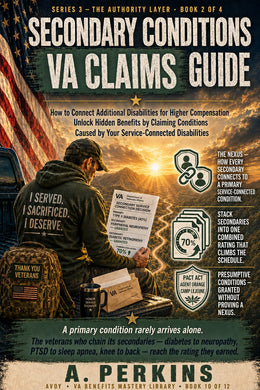
Secondary Conditions VA Claims Guide — part of the avoy VA Benefits Mastery Library by A. Perkins. Get the book →
Why Veterans Ask This Question
A lot of veterans live with PTSD for years before they ever hear the words 'sleep apnea.' They know something is wrong. They wake up tired. Their spouse says they stop breathing at night. They snore loud enough to wake the house. Then a sleep study comes back positive, and a new question shows up: is this connected to my service, or am I on my own?
That question matters because sleep apnea rarely stands alone. It often shows up next to conditions the veteran already has, like PTSD, depression, anxiety, or weight gain from years of poor sleep and low activity. When a veteran already has a service-connected mental health condition, it is fair to ask whether that condition helped cause the sleep apnea. This is the heart of a secondary claim.
Veterans also ask because the stakes are real. Sleep apnea can carry a meaningful rating when a breathing machine is required. Getting it service-connected as secondary to PTSD can change a veteran's combined rating and monthly compensation. So this is not a small question. It is a question that can shape a veteran's benefits for years.
Understanding The Topic
Let's keep this simple. A 'secondary' condition is a health problem that is caused or made worse by another condition that is already service-connected. The VA does not require the secondary condition to start in the military. It only requires a link between the service-connected condition and the new one.
PTSD is the 'primary' condition in this example. It is already tied to the veteran's service. Sleep apnea is the 'secondary' condition the veteran wants to connect. The idea is that PTSD, and the way it affects sleep, weight, breathing, and the nervous system, can contribute to the development or worsening of sleep apnea.
There are two main paths for a secondary claim. The first is causation, which means the PTSD helped cause the sleep apnea. The second is aggravation, which means the veteran may have had sleep apnea already, but the PTSD made it worse than it would have been on its own. Both paths can support service connection when the evidence backs them up.
Sleep apnea itself is a condition where breathing repeatedly stops and starts during sleep. The most common form is obstructive sleep apnea, where the airway collapses. It is usually diagnosed with a sleep study, either in a lab or with an approved home test. Once diagnosed, many veterans are prescribed a CPAP machine, which pushes air through a mask to keep the airway open.
The medical link between PTSD and sleep apnea is an area researchers continue to study. Some studies suggest that veterans with PTSD have higher rates of sleep-disordered breathing. Fragmented sleep, chronic stress, medication effects, and weight changes are often discussed as possible contributors. The exact biology is still being explored, which is why a doctor's opinion matters so much in these claims.
What The VA Generally Looks For
For a secondary claim, the VA generally looks for three basic building blocks. Understanding these three pieces makes the whole process less confusing.
First, the VA looks for a current diagnosis of sleep apnea. This almost always means a sleep study that confirms the condition. Without a formal diagnosis, there is nothing to service-connect. A snoring complaint is not enough on its own.
Second, the VA looks for a service-connected primary condition. In this case, that is PTSD. The PTSD must already be service-connected, or the veteran must be claiming it at the same time. If PTSD is not service-connected, there is no 'primary' condition to attach the sleep apnea to.
Third, the VA looks for a medical nexus. This is the link. It is usually a written opinion from a qualified medical professional saying that the veteran's sleep apnea is 'at least as likely as not' caused or aggravated by the service-connected PTSD. That phrase, 'at least as likely as not,' reflects the level of proof the VA uses. It does not mean certainty. It means the evidence is at least balanced.
The VA also weighs the reasoning behind the nexus opinion. A strong opinion explains why the two conditions are connected for this specific veteran. It points to the medical record, the timeline, and the science. A weak opinion just states a conclusion with no support. The rating criteria for sleep apnea, and the current forms, rates, and any updates to how these conditions are evaluated, should always be confirmed on VA.gov, because the rating schedule can change over time.
Common Mistakes Veterans Make
Many strong claims get denied not because the veteran was wrong, but because of avoidable mistakes. Here are the ones that come up again and again.
The biggest mistake is filing without a nexus opinion. Veterans often assume the VA doctor at the exam will connect the dots for them. Sometimes that happens. Often it does not. Without a clear medical opinion linking sleep apnea to PTSD, the claim can stall.
The second mistake is not explaining causation or aggravation. A veteran might submit a diagnosis and a PTSD rating and assume the link is obvious. To the VA, it is not obvious. Someone has to say, in medical terms, how the PTSD contributed to the sleep apnea.
A third mistake is ignoring lay evidence. Veterans forget that their own statements, and statements from a spouse or roommate, carry weight. A spouse who has watched the veteran stop breathing at night, or who saw sleep problems worsen as PTSD symptoms grew, can add real value to the record.
A fourth mistake is weak or missing records. If the sleep study, the CPAP prescription, and the PTSD treatment notes are not in the file, the VA cannot consider them. Veterans should make sure the evidence actually reaches the claim, not just their doctor's office.
A final mistake is giving up after a denial. A denied secondary claim is not the end of the road. Many veterans win on appeal or on a supplemental claim by adding the one piece that was missing, usually a stronger nexus opinion.
A Practical Educational Example
Consider a veteran we will call a former Army sergeant. He served in a combat zone and later received a service connection for PTSD. For years he struggled with broken sleep, nightmares, and daytime exhaustion. He gained weight as his activity dropped. His spouse noticed he would gasp and stop breathing during the night.
Eventually a doctor ordered a sleep study, which confirmed obstructive sleep apnea. He was prescribed a CPAP machine and used it every night. He wondered whether this new diagnosis had anything to do with the PTSD he already lived with.
Working with his own doctor, he gathered his sleep study, his CPAP prescription, and his PTSD treatment notes. His doctor reviewed the full picture and wrote an opinion explaining that the veteran's PTSD, with its chronic sleep disruption and related weight gain, at least as likely as not aggravated his sleep apnea. His spouse also wrote a short statement describing the years of worsening sleep and breathing.
The veteran filed a secondary claim, attached the diagnosis, the nexus opinion, and the lay statement, and pointed clearly to the connection. This example is educational and does not describe any specific person, and it does not promise any outcome. But it shows the shape of a well-organized secondary claim: a clear diagnosis, a service-connected primary condition, and a medical opinion that explains the link in plain, supported terms.
The avoy Perspective
At avoy, the goal is never to hand a veteran a magic phrase. The goal is to help a veteran build a claim that tells a clear, honest, well-supported story. That is exactly what the Secondary Conditions VA Claims Guide is designed to do. It walks through how secondary conditions work, how to recognize when a condition like sleep apnea may be linked to a primary condition like PTSD, and how to organize the evidence so the link is easy for a reviewer to see.
One avoy method that helps here is what we call the three-building-blocks approach: confirm the current diagnosis, confirm the service-connected primary condition, and secure a nexus that explains the link. When a veteran can point to all three, in writing, in one place, the claim is far easier to evaluate. avoy teaches veterans to assemble evidence like they are building a case file, not just filling out a form.
The avoy approach also stresses reading your own decision letter carefully and confirming every current figure, form, and rule on VA.gov. Rules change. Rating criteria get revised. The educational frameworks in the avoy library are meant to help a veteran understand the process, ask better questions, and work more effectively with an accredited representative.
Frequently Asked Questions
Can sleep apnea be secondary to PTSD if I was diagnosed years after service?
Yes. A secondary condition does not have to begin during service. What matters is the link between the service-connected PTSD and the sleep apnea. A diagnosis years later can still be connected if the medical evidence supports causation or aggravation.
Do I need a nexus letter for a sleep apnea secondary claim?
In most secondary claims, a nexus opinion is the single most important piece of evidence. It is the medical link between PTSD and sleep apnea. Some claims succeed on the exam alone, but a strong, well-reasoned nexus opinion greatly strengthens the record.
What is the difference between causation and aggravation?
Causation means the PTSD helped cause the sleep apnea. Aggravation means the veteran may have had sleep apnea already, but the PTSD made it worse than it otherwise would have been. Both can support service connection when the evidence backs them up.
How does the VA rate sleep apnea?
Sleep apnea is rated based on how severe it is and whether a breathing device is required. Because the rating schedule can be updated, veterans should confirm the current criteria, percentages, and any changes directly on VA.gov rather than relying on older figures.
Does using a CPAP machine matter for my claim?
A CPAP prescription is important evidence because it documents both the diagnosis and the treatment. Keep your sleep study and CPAP records in your file. Always confirm how a breathing device affects the current rating on VA.gov.
What if my secondary claim was already denied?
A denial is not the end. Many veterans succeed later by adding the missing piece, usually a stronger nexus opinion or better-organized evidence, through a supplemental claim or an appeal. Read your decision letter closely to see exactly what the VA said was missing.
Can my spouse's statement help my claim?
Yes. Lay statements from people who witnessed your symptoms, such as a spouse who saw you stop breathing at night or watched your sleep worsen alongside your PTSD, can add valuable support to the medical evidence.
Key Takeaways
- Sleep apnea can be service-connected as secondary to PTSD when the evidence shows the PTSD caused or aggravated it.
- The VA generally looks for three things: a current sleep apnea diagnosis, a service-connected primary condition (PTSD), and a medical nexus linking the two.
- A clear, well-reasoned nexus opinion is usually the most important piece of a secondary claim.
- Secondary claims can succeed through either causation or aggravation.
- Lay statements from a spouse or roommate can strengthen the record.
- A denial is not final; a supplemental claim or appeal with stronger evidence is often possible.
- Always confirm current rating criteria, rates, and forms on VA.gov, because the rules can change.
Related Resources
- Sleep Apnea VA Claim: A Complete Guide
- VA Secondary Conditions Explained
- What Is a Nexus Letter?
- Secondary Conditions VA Claims Guide (book)
- Free VA Evidence Checklist
- Ask the avoy Veteran Navigator AI
This guide reflects the educational work of A. Perkins — a former Air Force nuclear missile launch officer and a disabled veteran, author of the avoy VA Benefits Mastery Library and builder of the avoy Veteran Navigator AI.
Call To Action
Want a personalized educational roadmap? The avoy Veteran Navigator AI helps veterans better understand VA disability claims, ratings, secondary conditions, appeals, caregiver benefits, and family benefits — free educational guidance built on the avoy framework. Start free at avoyvet.com.
Educational information only. AVOY is not a law firm and does not provide legal, medical, or financial advice, and does not represent veterans in claims. AVOY is not affiliated with, endorsed by, or sponsored by the U.S. Department of Veterans Affairs. Filing a VA claim is free, and a VA-accredited Veterans Service Officer (VSO) can assist you at no cost. In crisis? Dial 988, then press 1.