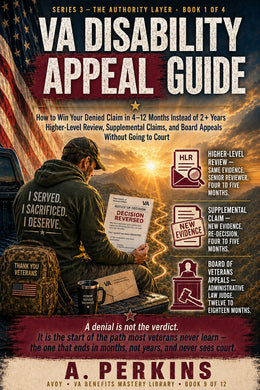
Roughly 125 days. That is the VA's average target for completing a Supplemental Claim for disability compensation in 2026, according to VA.gov's published processing goals. For a veteran whose claim was just denied, that number matters, because a Supplemental Claim is the fastest of the three appeal lanes VA offers under the Appeals Modernization Act. The pain point is familiar: a denial letter arrives, the reasoning feels wrong or incomplete, and the veteran does not know which of three review paths to choose or how to protect the back pay tied to the original filing date. This guide breaks down exactly when a Supplemental Claim is the right move, what counts as "new and relevant" evidence, and how to file VA Form 20-0995 correctly in 2026.
Key Takeaways
- Identify whether new evidence exists before choosing this lane — a Supplemental Claim requires something VA has not already reviewed.
- File within one year of the decision letter to protect the original effective date and preserve maximum back pay.
- Gather private medical records, nexus letters, buddy statements, or updated treatment notes VA has not seen.
- Submit VA Form 20-0995 directly to VA, choosing the correct benefit type and listing each contested issue by name.
- Track the case through a new rater, since a different VA employee reviews Supplemental Claims than the one who issued the original denial.
- Reopen PACT Act-related denials issued before August 10, 2022, since the law itself counts as new and relevant evidence for many toxic exposure claims.
Table of Contents
- Who Qualifies to File a Supplemental Claim
- Gathering New and Relevant Evidence
- Filing Strategy: Supplemental Claim vs. the Other Two Lanes
- Step-by-Step: How to Submit VA Form 20-0995
- After You File: What Happens Next
 |
From the AVOY VA Benefits Mastery Library The VA Disability Appeal Guide covers this in full depth, with step-by-step guidance for exactly this situation. Get the Book → |
Who Qualifies to File a Supplemental Claim
Any veteran, surviving spouse, or dependent who has received a VA decision they disagree with can file a Supplemental Claim, provided they have new and relevant evidence to add to the record. This is the one requirement that separates the Supplemental Claim from the other two Appeals Modernization Act lanes. Higher-Level Review and Board Appeal both work from the existing record; a Supplemental Claim is built specifically to bring something new into the file. VA created three independent review lanes in 2019 under the Appeals Modernization Act, and a veteran can select a different lane for each contested issue on the same decision, which means one denial letter covering three conditions could generate three separate strategies.
The "New and Relevant" Standard Explained
Under 38 CFR § 3.2501, evidence qualifies as "new" if VA has never seen it before, and "relevant" if it could reasonably prove or disprove something material to the claim. This is a lower bar than the old "new and material" standard veterans dealt with before 2019 reforms. Relevant evidence does not have to guarantee a win; it only has to be capable of changing the outcome. A veteran who submits a nexus letter connecting a knee condition to a documented in-service injury, for example, is submitting relevant evidence even if VA ultimately weighs it against other findings in the file. Veterans denied for lack of a nexus, insufficient severity documentation, or missing service connection evidence are the most common candidates for this lane.
Gathering New and Relevant Evidence
VA's own data shows most Supplemental Claim denials get reversed on appeal because the veteran either submitted evidence VA already had on file (which does not count as "new") or evidence too general to move the needle on "relevant." Building a strong evidence package before filing is the single biggest factor in a faster, cleaner outcome.
Private Medical Records and Nexus Letters
A private nexus letter from a treating physician or independent medical examiner is one of the strongest pieces of evidence a veteran can add. It should state, in medical terms, that the condition is "at least as likely as not" related to military service, and it should reference specific facts from the service record. Private DBQs (Disability Benefit Questionnaires) completed by a civilian provider carry similar weight, since they use the same rating criteria VA examiners use. Updated treatment records showing a condition has worsened since the last VA exam also qualify as new evidence, particularly for claims denied on severity grounds rather than service connection.
Buddy Statements and Service Records
Lay statements from fellow service members who witnessed an in-service event carry real weight when official records are incomplete, which is common for combat stress, military sexual trauma, and undocumented exposure incidents. A buddy statement should describe specific dates, locations, and what the witness personally observed. Service treatment records, personnel records, or deployment records not previously obtained and submitted can also satisfy the new-evidence requirement, especially for veterans whose claims were denied for lack of an in-service event.
Filing Strategy: Supplemental Claim vs. the Other Two Lanes
Choosing the wrong lane costs time. A veteran with new evidence who mistakenly files a Higher-Level Review will have that evidence excluded from review, since Higher-Level Review only examines the record that already existed at the time of the original decision. VA's official comparison tool at VA.gov lays out the three lanes side by side, and the decision usually comes down to one question: is there something new to add, or was there an error in how VA read the existing file?
When a Supplemental Claim Is the Right Choice
A Supplemental Claim fits when new medical evidence, buddy statements, or a change in law (like a new PACT Act presumption) exists that VA has not yet reviewed. It also fits when a veteran's condition has worsened since the last exam and updated records can demonstrate that. Because there is no cost and no hard deadline to file a Supplemental Claim (though acting within one year protects the effective date), it is often the lowest-risk of the three lanes when genuinely new evidence is available. A Higher-Level Review or Board Appeal, by contrast, fits better when the veteran believes VA made a factual or legal error using evidence already on file.
Step-by-Step: How to Submit VA Form 20-0995
VA Form 20-0995, Decision Review Request: Supplemental Claim, can be filed online through VA.gov, by mail, or in person at a VA regional office. The process below reflects the standard 2026 filing path for disability compensation claims.
Steps 1 Through 3: Prepare and Identify
Step 1: Locate the original decision letter and confirm the exact date it was issued, since this date controls the one-year effective-date window. Step 2: List every contested issue by its exact name as it appeared on the decision letter — VA processes each issue separately, so vague or mismatched issue names slow the review. Step 3: Confirm each piece of new evidence is either attached to the form or identified with enough detail (provider name, date, and location) for VA to request it directly through its duty to assist.
Steps 4 and 5: Submit and Confirm
Step 4: Submit VA Form 20-0995 through VA.gov, by mail to the address listed on the form instructions, or in person, and request or save a confirmation of submission. Step 5: Log into VA.gov or call the VA benefits hotline within a few weeks to confirm the Supplemental Claim was received and matched to the correct issues, since paperwork mismatches are one of the most common causes of unnecessary delay.
After You File: What Happens Next
Once VA receives a completed Supplemental Claim, the case is reassigned to a different rater than the one who issued the original decision. VA's duty to assist applies, meaning VA must help obtain federal records (like service treatment records) even though the veteran is responsible for private evidence. VA's 2026 average processing goal for Supplemental Claims is about 125 days for disability compensation and pension issues, though timelines vary by regional office workload and case complexity.
If the Supplemental Claim Is Approved
An approved Supplemental Claim typically results in a new rating decision letter and, if the effective date was protected by filing within one year, back pay calculated from the original claim date rather than the Supplemental Claim filing date. For PACT Act-related toxic exposure claims denied before August 10, 2022, the effective date rules are more specific, and veterans should read the decision letter carefully or consult a VA-accredited representative to confirm how the effective date was calculated.
If the Supplemental Claim Is Denied Again
A veteran can file another Supplemental Claim with additional new evidence, move to a Higher-Level Review if the argument is now that VA misapplied the law or missed evidence already in the file, or file a Notice of Disagreement (VA Form 10182) to send the case to the Board of Veterans' Appeals. There is no limit on how many times a veteran can file a Supplemental Claim, as long as each submission includes evidence VA has not already considered.
Every veteran's Supplemental Claim depends on the specific evidence in their file and the exact wording of their denial. The Free VA Claim Readiness Test at avoyvet.com walks through the current decision, the available evidence, and the strongest next step in a few minutes, at no cost.
Frequently Asked Questions
What is the difference between a Supplemental Claim and an appeal?
A Supplemental Claim is one of three review options under VA's Appeals Modernization Act framework, alongside Higher-Level Review and Board Appeal. All three are sometimes referred to informally as "appeals," but a Supplemental Claim is specifically the lane built for adding new and relevant evidence to a previously decided issue. Higher-Level Review and Board Appeal work from the existing record without new evidence. Choosing the right lane depends on whether new evidence exists or whether the argument is that VA made an error with the evidence already on file. A veteran can file more than one lane across different issues on the same decision letter.
How long does a VA Supplemental Claim take in 2026?
VA's published 2026 processing goal for Supplemental Claims tied to disability compensation and pension is an average of about 125 days, roughly four to five months. Actual processing time varies by regional office, case complexity, and whether the new evidence requires VA to request additional federal records under its duty to assist. Veterans can check the status of a pending Supplemental Claim through their VA.gov account. Filing complete, well-organized evidence up front tends to reduce delays caused by VA needing to follow up for missing documentation.
Can I file a Supplemental Claim without a lawyer or VSO?
Yes. VA Form 20-0995 does not require legal or VSO representation to file, and many veterans submit Supplemental Claims on their own through VA.gov. That said, a VA-accredited Veterans Service Officer can help identify what qualifies as new and relevant evidence, review the form before submission, and flag issues most likely to trigger a follow-up delay, often at no cost. Veterans pursuing complex claims, especially those involving multiple contested issues or disputed nexus opinions, often benefit from at least one review by an accredited representative before filing.
Does the PACT Act let me reopen an old denied claim?
For many toxic exposure conditions denied before August 10, 2022, the PACT Act itself functions as new and relevant evidence, since it added new presumptive conditions VA did not recognize at the time of the original denial. Veterans in this situation are generally not required to submit additional medical evidence beyond identifying the PACT Act presumption that now applies to their condition. Effective dates on these reopened claims depend on when the original claim was filed and when the Supplemental Claim is submitted, so veterans should confirm the exact effective date calculation in their decision letter.
What counts as "new and relevant" evidence?
Evidence is "new" if VA's file does not already contain it, and "relevant" if it could reasonably help prove or disprove a fact that matters to the claim, under the standard set by 38 CFR § 3.2501. Common examples include private nexus letters, buddy statements describing an in-service event, updated treatment records showing a condition has worsened, private DBQs, and previously unobtained service records. Evidence VA already reviewed and rejected, even if resubmitted, generally does not meet the "new" requirement unless it is paired with additional supporting material.
Will filing a Supplemental Claim lower my current rating?
A Supplemental Claim reviews the specific issue identified on the form, and VA does not use it as an opportunity for a broader, unrelated review of unrelated ratings. However, if the new evidence submitted directly relates to the severity of the same condition, it is possible for a rating to be adjusted based on what the new evidence shows, in either direction. Veterans concerned about this should discuss the specific facts of their case with a VA-accredited representative before submitting updated evidence tied to severity.
What happens if I miss the one-year deadline?
There is no hard deadline to file a Supplemental Claim itself; it can generally be filed at any time. However, filing outside one year of the original decision letter means the effective date for any resulting award typically ties to the new Supplemental Claim filing date rather than the original claim date, which can significantly reduce back pay. Veterans who are close to or past the one-year mark should still file as soon as new evidence becomes available, since further delay only pushes the effective date later.
Educational information only — not legal, medical, or claim representation, and not affiliated with the U.S. Department of Veterans Affairs. For help filing or appealing, contact a VA-accredited VSO (often free), claims agent, or attorney. For current rates, forms, and deadlines, see VA.gov.