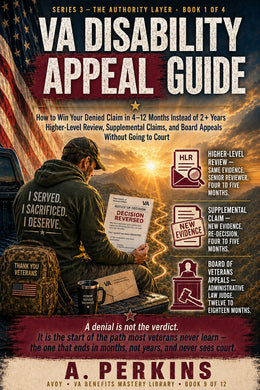
VA's official target for completing a Higher-Level Review is 125 days, the same modernized-appeals goal VA sets for a Supplemental Claim, though veterans with more complex cases or an informal conference request often wait six to eight months. For a veteran who believes VA read the file correctly but weighed it wrong, that number matters, because a Higher-Level Review is the only one of VA's three appeal lanes that sends the exact same evidence to a more senior reviewer looking specifically for a factual or legal mistake. The pain point is familiar: a denial arrives, nothing in the medical record has changed, and the veteran suspects VA simply got the call wrong. This guide covers exactly when a Higher-Level Review is the right move in 2026, what a senior reviewer can and cannot consider, and how to file VA Form 20-0996 correctly.
Key Takeaways
- Confirm no new evidence exists before choosing this lane — a Higher-Level Review only works from the record already in the file.
- File within one year of the decision letter to protect the original effective date and preserve maximum back pay.
- Identify a specific factual or legal error, such as an unapplied presumption or a miscalculated combined rating under 38 CFR 4.25.
- Request one informal conference, by phone, to walk a senior reviewer through the exact error you found in the existing record.
- Submit VA Form 20-0996 directly to VA, selecting the correct benefit type and listing every contested issue by name.
- Track the case through a senior adjudicator, since a more experienced VA employee reviews Higher-Level Review requests than the rater who issued the original denial.
Table of Contents
- Who Qualifies for a Higher-Level Review
- What a Senior Reviewer Can and Cannot Consider
- Filing Strategy: Higher-Level Review vs. the Other Two Lanes
- Step-by-Step: How to Submit VA Form 20-0996
- After You File: What Happens Next
 |
From the AVOY VA Benefits Mastery Library The VA Disability Appeal Guide covers this in full depth, with step-by-step guidance for exactly this situation. Get the Book → |
Who Qualifies for a Higher-Level Review
Any veteran, surviving spouse, or dependent who has received a VA decision they disagree with can request a Higher-Level Review, with one condition: there must be no new evidence to add. That single rule separates this lane from a Supplemental Claim. VA created three independent review lanes in 2019 under the Appeals Modernization Act, and a veteran can choose a different lane for each contested issue on the same decision letter, meaning one denial covering three conditions could generate three separate strategies. A Higher-Level Review sends the case to a more senior VA adjudicator, someone with more experience than the rater who issued the original decision, and that reviewer looks only at the evidence that existed at the time of the prior decision.
The No-New-Evidence Rule Explained
This is the detail that trips up the most veterans. If new medical records, a nexus letter, or a buddy statement exist that VA has not seen, a Higher-Level Review is the wrong lane, because that evidence will not be considered — it would need to go through a Supplemental Claim instead. A Higher-Level Review fits when the veteran's argument is entirely about how VA handled the record it already had: a presumption that should have applied automatically, a combined rating calculated incorrectly, or medical evidence that was in the file but appears to have been overlooked or misread.
What a Senior Reviewer Can and Cannot Consider
A Higher-Level Review is a review of VA's own work, not a fresh look at the veteran's condition. The reviewer is checking whether the prior rater applied the correct law, correctly read the evidence on file, and met VA's procedural obligations. Two categories of error come up most often in these reviews.
Duty to Assist Errors
A duty to assist error happens when VA failed to obtain evidence it was legally required to gather before deciding the claim, such as service treatment records already identified in the file or a scheduled C&P exam that never happened. If a Higher-Level Review reviewer finds a duty to assist error, the case does not simply get a new decision — it gets sent back so VA can correct the missing step first, which can extend the timeline beyond the 125-day target.
Common Factual and Legal Errors HLR Reviewers Catch
Beyond duty to assist issues, senior reviewers look for misapplied presumptions (such as a PACT Act condition VA failed to recognize as automatic), combined ratings that do not follow the VA Combined Ratings Table under 38 CFR § 4.25, incorrect effective dates, and medical evidence in the file that the original decision did not address. Note that this is a different, lower bar than "clear and unmistakable error" (CUE), a much stricter legal standard reserved for revising decisions that are already final; a Higher-Level Review filed within the one-year appeal window does not require meeting the CUE standard.
Filing Strategy: Higher-Level Review vs. the Other Two Lanes
Choosing the wrong lane costs time. A veteran with genuinely new evidence who files a Higher-Level Review will have that evidence excluded from consideration, since this lane only examines the record that existed at the time of the original decision. VA's official lane-comparison guidance on VA.gov lays out all three options side by side, and the decision usually comes down to one question: is there something new to add, or was there an error in how VA handled the file it already had?
When a Higher-Level Review Is the Right Choice
This lane fits best when a veteran can point to a specific, identifiable mistake — a rating percentage that does not match the diagnostic code criteria, a presumptive condition that should have been granted automatically under current law, or evidence in the claims file that the decision letter never mentions. It is often the fastest of the three lanes when no new evidence is needed, since VA is reviewing a smaller, more defined question than a full Board Appeal. A Supplemental Claim or Board Appeal fits better when new evidence exists or when the veteran wants an independent Veterans Law Judge, rather than a VA employee, to decide the case.
Step-by-Step: How to Submit VA Form 20-0996
VA Form 20-0996, Decision Review Request: Higher-Level Review, can be filed online through VA.gov, by mail, or in person at a VA regional office. The process below reflects the standard 2026 filing path for disability compensation claims.
Steps 1 Through 3: Prepare and Identify
Step 1: Locate the original decision letter and confirm the exact date it was issued, since this date controls the one-year window for protecting the original effective date. Step 2: List every contested issue by its exact name as it appeared on the decision letter, since VA reviews each issue separately. Step 3: Write out, in plain language, the specific error believed to exist in each issue — a missed presumption, a math error, or evidence that was overlooked — so the reviewer knows precisely what to check.
Steps 4 and 5: Submit and Confirm
Step 4: Submit VA Form 20-0996 through VA.gov, by mail to the address listed on the form instructions, or in person, and decide whether to request the one-time informal conference to explain the error by phone. Step 5: Log into VA.gov or call the VA benefits hotline within a few weeks to confirm the Higher-Level Review was received and matched to the correct issues, since mismatched paperwork is one of the most common causes of unnecessary delay.
After You File: What Happens Next
Once VA receives a completed Higher-Level Review request, the case is reassigned to a senior adjudicator who did not work on the original decision. If an informal conference was requested, VA makes reasonable efforts to schedule a phone call, though this step is the single biggest factor that pushes cases past the 125-day target. VA's 2026 average processing goal for Higher-Level Reviews is about 125 days for disability compensation issues, though real-world timelines commonly run three to six months and longer for cases involving a duty to assist error.
If the Higher-Level Review Finds an Error
A favorable Higher-Level Review results in a new decision correcting the identified error, and if a duty to assist error caused the original mistake, VA must first gather the missing evidence before issuing the corrected decision. Because the effective date is protected when filed within one year, back pay is typically calculated from the original claim date, not the Higher-Level Review filing date.
If the Higher-Level Review Is Denied
A veteran whose Higher-Level Review is denied again can file a Supplemental Claim if new evidence has since become available, or file a Notice of Disagreement (VA Form 10182) to send the case to the Board of Veterans' Appeals for review by a Veterans Law Judge. A veteran cannot request a second Higher-Level Review of the same Higher-Level Review decision on the same issue.
Every Higher-Level Review depends on the specific error in the specific decision letter, and choosing the wrong lane can cost months of otherwise avoidable delay. The Free VA Claim Readiness Test at avoyvet.com walks through the current decision and the strongest next step in a few minutes, at no cost.
Frequently Asked Questions
What is the difference between a Higher-Level Review and a Supplemental Claim?
A Higher-Level Review and a Supplemental Claim are two of the three review lanes under VA's Appeals Modernization Act, alongside Board Appeal. A Higher-Level Review sends the existing record to a more senior VA adjudicator looking for a factual or legal error, with no new evidence allowed. A Supplemental Claim is built specifically for adding new and relevant evidence VA has not previously reviewed. Choosing the right lane depends on whether new evidence exists: if it does, a Supplemental Claim is the correct choice; if the argument is purely that VA misread or mishandled the existing file, a Higher-Level Review fits better. A veteran can select a different lane for each contested issue on the same decision.
How long does a VA Higher-Level Review take in 2026?
VA's published 2026 processing goal for Higher-Level Reviews tied to disability compensation is an average of about 125 days, roughly four months. Actual processing time varies by regional office, case complexity, and whether an informal conference was requested, which is the most common factor that extends the timeline. Cases where the reviewer finds a duty to assist error can take longer, since VA must first correct the missing step before issuing a new decision. Veterans can check the status of a pending Higher-Level Review through their VA.gov account under Decision Reviews and Appeals.
Can I submit new evidence during a Higher-Level Review?
No. A Higher-Level Review is limited to the evidence that existed in the claims file at the time of the original decision. This applies even during the optional informal conference, where a veteran or representative can explain an error by phone but cannot introduce new facts or documents. If new evidence becomes available after the original decision, it should be submitted through a Supplemental Claim instead, either on its own or after an unfavorable Higher-Level Review. Submitting new evidence directly to a Higher-Level Review request does not add it to the reviewed record.
What happens during the informal conference?
The informal conference is a one-time, optional phone call between the veteran (or their representative) and the VA reviewer handling the Higher-Level Review. It is not a hearing and does not allow new evidence; its purpose is to let the veteran walk the reviewer through the specific error believed to exist in the record, such as a missed presumption or a miscalculated rating. VA must receive the conference request at the same time as the Higher-Level Review application itself. VA makes reasonable efforts to schedule the call, but if those efforts are unsuccessful, VA may issue a decision without holding the conference.
Can I file a Higher-Level Review without a lawyer or VSO?
Yes. VA Form 20-0996 does not require legal or VSO representation, and many veterans file a Higher-Level Review on their own through VA.gov. That said, a VA-accredited Veterans Service Officer can help pinpoint the specific factual or legal error worth raising, since a vague or unsupported error argument is less likely to succeed than one built around a specific regulation, presumption, or rating calculation, often at no cost. Veterans with complex combined ratings, disputed presumptions, or multiple contested issues often benefit from at least one review by an accredited representative before filing.
What if the Higher-Level Review finds a duty-to-assist error?
If the senior reviewer determines VA failed to meet its duty to assist, such as never obtaining identified service treatment records or never scheduling a required C&P exam, the case is not simply decided on the existing record. Instead, VA must first correct the missing step, gather the outstanding evidence, and then issue a new decision that accounts for it. This process can push the case beyond the standard 125-day target, since the timeline depends on how quickly the missing evidence can be obtained, which varies by the type of record and the provider or agency involved.
Can I appeal a denied Higher-Level Review to the Board?
Yes. A veteran whose Higher-Level Review is denied can file a Notice of Disagreement (VA Form 10182) within one year of the Higher-Level Review decision to send the case to the Board of Veterans' Appeals, where an independent Veterans Law Judge reviews it. A veteran can also file a new Supplemental Claim if new and relevant evidence has since become available, rather than or in addition to a Board Appeal. A veteran cannot request a second Higher-Level Review of the same denied issue using the same lane.
Educational information only — not legal, medical, or claim representation, and not affiliated with the U.S. Department of Veterans Affairs. For help filing or appealing, contact a VA-accredited VSO (often free), claims agent, or attorney. For current rates, forms, and deadlines, see VA.gov.