VA decided disability claims in an average of 78.6 days as of May 2026, but speed does not guarantee approval. One of the most common reasons a claim comes back denied is a missing or weak nexus opinion — the medical link between a current condition and military service. Veterans often assume a denial means the condition itself was rejected, when in reality VA simply found the connection to service unproven. That gap is fixable. This guide covers why nexus denials happen, what kind of evidence actually satisfies VA's evidentiary standard, and how to rebuild a stronger claim and refile in 2026 instead of giving up.
Key Takeaways
- Identify the exact reason for denial by reading the "reasons and bases" section of the rating decision before doing anything else.
- Gather a private nexus letter or independent medical opinion that uses the "at least as likely as not" standard.
- Request service treatment records and private medical records VA may not have reviewed the first time.
- Collect buddy statements documenting the in-service event, injury, or symptoms that have continued since service.
- File a Supplemental Claim with new and relevant evidence rather than starting an appeal from scratch.
- Check PACT Act presumptive condition lists first, since some conditions no longer require a nexus opinion at all.
Table of Contents
- Why VA Denies Claims for Lack of Nexus
- Evidence That Fixes a No-Nexus Denial
- Filing Strategy: Standard vs. Fully Developed Supplemental Claim
- How to Fix a No-Nexus Denial: 5 Steps to Refile
- After You Refile: C&P Exam, Decision, and Next Steps
 |
From the AVOY VA Benefits Mastery Library The VA Disability Appeal Guide covers this in full depth, with step-by-step guidance for exactly this situation. Get the Book → |
Why VA Denies Claims for Lack of Nexus
Service connection under 38 CFR 3.303 requires three things: a current diagnosis, an in-service event or exposure, and a medical nexus tying the two together. When a rating decision cites "insufficient evidence to establish a link" or "no medical nexus of record," VA is saying the first two elements may be fine, but nothing in the file connects the current condition to service with the required probability. VA's own accuracy rate on these decisions is now above 94 percent, the highest in two years, which means raters are applying the standard consistently — the fix has to come from the evidence, not from arguing the decision was a mistake.
This applies to any veteran whose denial letter references lack of nexus, lack of a medical opinion, or an unfavorable C&P exam opinion. It does not apply the same way to conditions covered by a presumption, since those skip the nexus requirement entirely.
The Three-Legged Stool: What Nexus Actually Proves
Veterans' advocates often call service connection a three-legged stool: current diagnosis, in-service event, and nexus. If any leg is missing, the claim falls. A nexus opinion must use VA's evidentiary standard — "at least as likely as not," meaning a 50 percent or greater probability that the condition is related to service. Opinions that say a condition is merely "possible" or "could be related" do not meet this bar and are routinely discounted. The opinion also needs a clinical rationale: the examiner should explain why they reached that conclusion, citing the veteran's specific service records or established medical literature rather than offering a bare conclusion.
Evidence That Fixes a No-Nexus Denial
Fixing a nexus denial means building the missing leg of the stool with evidence VA did not have, or did not weigh correctly, the first time. Under 38 CFR 3.159(a)(1), a private medical opinion counts as competent medical evidence, and VA cannot reject it solely because the veteran paid for it. That rule matters because many nexus denials happen after an unfavorable or thin C&P exam opinion, and veterans are allowed to submit their own opinion to counter it.
Independent Medical Opinions and Nexus Letters
An independent medical opinion (IMO), also called a nexus letter, is a written opinion from a qualified provider — an MD, DO, physician assistant, nurse practitioner, or, for mental health conditions, a psychologist or licensed clinical social worker. Private nexus letters typically run $300 to $800 depending on the complexity of the condition and how much records review is required. A strong letter states the "at least as likely as not" language explicitly, reviews the veteran's service treatment records and current diagnosis, and explains the medical reasoning in plain terms rather than restating the diagnosis alone.
Buddy Statements, STRs, and PACT Act Presumptive Shortcuts
Lay evidence still matters. Buddy statements from fellow service members can establish that an in-service event happened even when it was never formally documented, and statements from family members can establish that symptoms have continued since separation. Before spending money on a private opinion, check whether the condition already qualifies as a PACT Act presumptive — conditions tied to burn pit, Agent Orange, Gulf War, radiation, or Camp Lejeune exposure often bypass the nexus requirement entirely once service in a qualifying location and time period is shown.
Filing Strategy: Standard vs. Fully Developed Supplemental Claim
Once new nexus evidence is in hand, the fix is a Supplemental Claim (VA Form 20-0995), not a new original claim and not automatically a Board appeal. A Supplemental Claim requires "new and relevant" evidence — evidence VA did not previously consider that relates to the reason for denial. A properly obtained nexus letter almost always qualifies, since it is new evidence directly addressing the exact basis for the denial.
Veterans choosing this route effectively make the same standard-versus-fully-developed decision they faced on the original claim. Submitting all evidence with the Supplemental Claim functions like a Fully Developed Claim: VA can move straight to a decision without waiting on records requests. Filing the form and indicating more evidence is still being gathered functions like a Standard Claim: VA will develop the file further, which adds time.
When to Submit Evidence Upfront vs. Let VA Develop the Claim
If the nexus letter, updated private records, and any buddy statements are ready, submit everything with the Supplemental Claim application itself. This is the faster path and avoids VA sending duplicate records requests for documents already on hand. If the nexus letter is still being drafted or a specialist appointment is pending, it is usually better to file the Supplemental Claim to preserve the effective date and follow up with the evidence within a reasonable window, rather than delaying the filing itself. Waiting to file until every document is perfect can cost back pay, since the Supplemental Claim's effective date rules are tied to when the claim is filed relative to the original denial.
How to Fix a No-Nexus Denial: 5 Steps to Refile
Refiling after a nexus denial follows a specific sequence, and skipping steps is the most common way veterans end up denied a second time for the same reason.
Steps 1-3: Diagnose, Gather, Request
- Read the full rating decision, not just the summary letter, and identify the exact language VA used to explain the nexus denial — this determines exactly what the new evidence needs to address.
- Schedule an appointment with a treating provider or a specialist willing to write a nexus letter that reviews the service record and applies the "at least as likely as not" standard with a clear rationale.
- Request a copy of the claims file (C-file) and any private treatment records VA may not have obtained, so the new opinion is based on the complete picture rather than a partial record.
Steps 4-5: File and Track
- File VA Form 20-0995, Decision Review Request: Supplemental Claim, listing the new nexus letter and any supporting buddy statements as the new and relevant evidence.
- Track the claim through VA.gov or the VA health and benefits app, and respond promptly to any request for a new C&P exam or additional records, since delayed responses slow the file down.
After You Refile: C&P Exam, Decision, and Next Steps
Filing a Supplemental Claim does not guarantee VA accepts the private nexus letter without further review. In many cases, new nexus evidence triggers a fresh Compensation and Pension exam so a VA examiner can weigh the new opinion directly.
What Happens at the New C&P Exam
The examiner will typically have access to the newly submitted nexus letter and is expected to address it in their own opinion, either agreeing with the private provider's rationale or explaining specifically why they disagree. A vague or one-line disagreement from the examiner, without its own clinical rationale, can itself become grounds for a further challenge. Veterans should bring a copy of their symptom history to the exam and describe how the condition affects daily function on a bad day, not just a good one.
If You're Denied Again: Higher-Level Review or Board
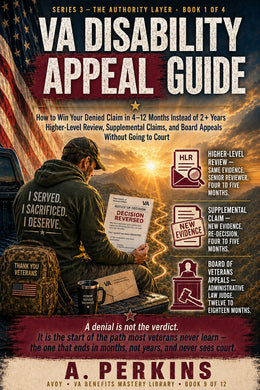
If the Supplemental Claim is still denied, two paths remain. A Higher-Level Review asks a more senior VA adjudicator to re-examine the same evidence for legal or factual error, without submitting anything new — useful if the new nexus letter was ignored or misread rather than genuinely weighed. Filing a Notice of Disagreement to the Board of Veterans' Appeals is the other option, typically reserved for cases where the veteran wants a formal hearing or believes the disagreement goes beyond a simple record error. Both paths preserve the effective date established by the original Supplemental Claim filing, so choosing the right lane matters more than choosing quickly.
Take the Next Step
A no-nexus denial is a documentation problem, not a dead end. The next move is building the missing medical link with the right kind of evidence and refiling through the correct lane. For a personalized read on where a claim stands and what evidence is still missing, veterans can take the free VA Claim Readiness Test at avoyvet.com and get a clear, educational breakdown of next steps before refiling.
Frequently Asked Questions
What does it mean when VA denies a claim for "lack of nexus"?
It means VA reviewed the file and did not find sufficient medical evidence connecting a current, diagnosed condition to an event, injury, or exposure during military service. It does not mean the condition itself was rejected as invalid, and it does not mean the claim can never succeed. It specifically means the third element of service connection — the medical link — was not established to VA's required standard in the evidence VA had at the time. Reading the full rating decision, particularly the reasons-and-bases section, is the only reliable way to know exactly what was missing, since two "no nexus" denials can point to very different gaps in the record.
Can I get a nexus letter from my regular doctor, or does it have to be a specialist?
A nexus letter can come from any provider qualified by education, training, or experience under 38 CFR 3.159(a)(1), which includes primary care physicians, physician assistants, and nurse practitioners, not only specialists. What matters more than the provider's title is whether they are willing to review the service treatment records, apply the "at least as likely as not" standard explicitly, and explain their reasoning. A specialist's opinion can carry more weight for a complex or rare condition, but a well-reasoned letter from a treating provider who knows the veteran's history is often more persuasive than a generic opinion from an unfamiliar specialist.
How much does a nexus letter or independent medical opinion cost?
Private nexus letters generally range from $300 to $800, depending on the complexity of the condition and how much records review the provider needs to do. Costs run higher for conditions requiring review of extensive service and treatment records or for opinions addressing secondary or aggravation claims, which require more detailed rationale. This is an out-of-pocket cost in most cases, since VA does not pay for private opinions veterans obtain on their own. Some veterans service organizations and nonprofit clinics offer free or reduced-cost nexus opinion assistance, which is worth researching before paying full price.
Should I file a Supplemental Claim or go straight to a Higher-Level Review after a nexus denial?
File a Supplemental Claim if new evidence exists, such as a new nexus letter, updated private records, or a buddy statement not previously considered. File a Higher-Level Review only if no new evidence exists and the argument is that VA misread or mishandled evidence already in the file. Since a nexus denial is almost always fixed by adding a new medical opinion, the Supplemental Claim is the correct lane in most no-nexus cases. Filing a Higher-Level Review without new evidence when the real problem is a missing nexus opinion usually results in the same denial being upheld.
Do I need a nexus letter if my condition is covered by the PACT Act?
Often not. PACT Act presumptive conditions, including many burn pit-related respiratory conditions and cancers, Agent Orange conditions, and Gulf War illness conditions, do not require a nexus opinion once the veteran shows qualifying service in the covered location and time period and a current diagnosis. If a claim for a presumptive condition was denied for lack of nexus, it is worth double-checking whether it should have been evaluated as presumptive in the first place, since that may be an error correctable through a Higher-Level Review rather than requiring new medical evidence at all.
Will a new C&P exam happen automatically after I submit a new nexus letter?
Not always, but it is common. When new medical evidence directly addresses the reason for a prior denial, VA frequently schedules a new Compensation and Pension exam so an examiner can review and respond to the new opinion. The examiner is expected to address the new evidence directly, either concurring with the private opinion's reasoning or explaining specifically why they disagree with it. Missing a scheduled C&P exam can result in the Supplemental Claim being decided on the existing record or denied for failure to report, so confirming the appointment and attending is an important part of the process.
How long does a Supplemental Claim take to get a decision after a nexus denial?
VA's stated processing goal for Supplemental Claims is an average of 125 days, though actual times vary based on whether a new C&P exam is required and how quickly the veteran responds to any follow-up requests. Submitting complete evidence with the initial filing, rather than filing first and gathering evidence afterward, generally leads to a faster decision because it avoids a separate records-development period. Veterans can track the status of a pending Supplemental Claim through VA.gov or the VA health and benefits app rather than waiting for a mailed update.
Educational information only — not legal, medical, or claim representation, and not affiliated with the U.S. Department of Veterans Affairs. For help filing or appealing, contact a VA-accredited VSO (often free), claims agent, or attorney. For current rates, forms, and deadlines, see VA.gov.