Numb feet, burning toes, and legs that give out on stairs are daily reality for many veterans with diabetes, yet the nerve damage is often missed on a claim. VA states that it considers type 2 diabetes a presumptive condition when a veteran meets the Agent Orange service requirements, and diabetic complications can be rated on their own. This guide explains how diabetic peripheral neuropathy is connected to service, what evidence matters, how ratings are structured in 2026, and what happens after filing, so every symptom reaches the rating decision. Veterans, spouses, and caregivers will find plain steps for each stage.
Key Takeaways
- Confirm whether type 2 diabetes is already service connected, because neuropathy can be claimed as a secondary condition.
- Document numbness, burning, weakness, and balance problems for each limb, including the worst days.
- Request medical records that show a diagnosis, nerve testing, and a doctor's opinion linking the nerve damage to diabetes.
- Compare the Agent Orange early-onset neuropathy rule with the secondary claim path before choosing a theory.
- File a complete claim with evidence attached, and keep the effective date protected with an intent to file.
- Prepare for the C&P exam by describing how symptoms limit walking, standing, grip, and work.
Table of Contents
- Who Qualifies for a Diabetic Neuropathy Claim
- Evidence That Proves Nerve Damage From Diabetes
- Filing Strategy: Standard Claim or Fully Developed Claim
- Step-by-Step: Submitting the Neuropathy Claim
- After Filing: Exam, Rating Decision, and Appeals
 |
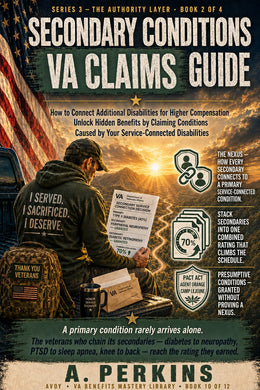
From the AVOY VA Benefits Mastery Library Secondary Conditions VA Claims Guide covers this in full depth, with step-by-step guidance for exactly this situation. Get the Book → |
Who Qualifies for a Diabetic Neuropathy Claim
Veterans often wait years before connecting foot numbness to diabetes, and that delay can cost back pay. Two main paths exist for a neuropathy claim, and each has different proof requirements. Understanding which path fits protects the claim from the start.
Two Paths to Service Connection
The first path is secondary service connection. Under 38 CFR 3.310, a disability caused or aggravated by a service-connected condition can itself be service connected. If diabetes is already service connected, nerve damage in the feet, legs, hands, or arms that was caused or worsened by diabetes may qualify as a secondary condition. The claim must show three things: a current diagnosis, a service-connected diabetes rating, and medical evidence linking the two.
The second path involves Agent Orange. VA's public health site lists early-onset peripheral neuropathy, acute and subacute, as a presumptive disease tied to herbicide exposure. According to that page, it must be at least 10 percent disabling within one year of herbicide exposure. That window is narrow, so this path mostly applies when symptoms appeared soon after exposure. Most diabetic nerve damage appears years later and fits the secondary path instead.
VA also explains that type 2 diabetes is presumed service connected when a veteran received a rating of at least 10 percent within one year of leaving service, or meets the service requirements for presumed Agent Orange exposure. A veteran who qualifies for that presumption does not have to prove the original link, only the service requirements. Once diabetes is service connected, the neuropathy claim can build on it.
Eligibility also depends on discharge status and valid service dates, which VA reviews with the DD214. Veterans unsure whether a discharge qualifies should confirm on VA.gov or ask an accredited representative before filing. Educational guidance cannot promise any result, but understanding these paths helps the claim begin on firm ground.
Evidence That Proves Nerve Damage From Diabetes
Evidence decides most neuropathy claims. Veterans lose ground when records show tingling in a note but never name a diagnosis or a cause. Building a clear paper trail turns scattered complaints into proof VA can use.
Medical Records and Nexus Opinions
A current diagnosis is the foundation. Records should show a neurologist, primary care provider, or endocrinologist diagnosing peripheral neuropathy, ideally with results of nerve conduction studies or other testing. Records that tie symptoms to diabetes matter just as much. A written opinion from a treating clinician stating that the neuropathy is at least as likely as not caused or aggravated by diabetes gives VA the link it needs. Veterans can ask their provider to address that exact question and explain the reasoning.
Service treatment records and VA treatment notes help show when diabetes began and how it has progressed. Private records should be requested early, because outside offices can take weeks to respond. Blood sugar logs, medication histories, and notes about foot care also show how the disease has affected the nerves over time.
VA's own claim guidance says supporting evidence can include VA and private medical records and hospital reports. Veterans have up to a year from when VA receives a claim to provide more evidence, so gaps can be filled later.
Lay Statements and Symptom Tracking
Statements from the veteran, spouse, family, friends, or fellow service members can describe what records often leave out. Examples include dropping objects, tripping on uneven ground, being unable to feel water temperature, sleeping poorly because of burning pain, or needing to sit during chores. Specific, dated examples carry more weight than general statements.
A symptom journal is useful for the exam. Entries should name the limb, the sensation, how long it lasted, and what activity it interrupted. Describing the worst days, not the best, shows the real impact. For the Agent Orange early-onset rule, any record from the first year after exposure becomes especially valuable.
Filing Strategy: Standard Claim or Fully Developed Claim
Many veterans file the neuropathy claim late or bundle it poorly, and then wonder why one limb was rated and another was missed. A clear plan helps each affected limb get considered, keeps the claim organized, and lowers the risk of avoidable delays that push decisions further out.
Standard Claim vs Fully Developed Claim
A standard claim lets VA gather records after filing, which can add time for requests and responses. A Fully Developed Claim means sending the available evidence with the application so VA can decide with less back-and-forth. VA's guidance encourages sending all supporting documents with a claim to help it process faster. For neuropathy, that usually means attaching the diagnosis, test results, and the doctor's opinion at the start.
Strategy also involves how the condition is described. Diabetes is rated under its own code, and under 38 CFR 4.119, Note 1 to diagnostic code 7913, compensable complications of diabetes are evaluated separately, while noncompensable complications are considered part of the diabetic process. That means neuropathy can receive its own rating rather than being folded into the diabetes percentage. Each affected limb may be considered separately, so the claim should list every limb with symptoms.
Timing matters too. An intent to file preserves a potential effective date while evidence is gathered. VA says the date an application is started counts as the claim date if the veteran finishes it within 365 days. Filing before symptoms are worse is not required, but filing soon after a diagnosis protects back pay.
If neuropathy has worsened on an already rated condition, an increase claim may fit better than a new claim. An accredited representative can help sort which type applies. Veterans with other conditions can sequence claims so the strongest evidence goes first. No strategy can guarantee a rating, an amount, or a timeline, but a complete, well-organized submission gives reviewers what they need.
Step-by-Step: Submitting the Neuropathy Claim
Veterans often stall at the last step, unsure which form to use, where to send it, or whether the evidence is ready. The path is simple once the pieces are in hand, and VA offers five ways to file. Taking the steps in order keeps the claim date protected and the paperwork clean.
Preparing the Submission
Before filing, gather the diagnosis, test results, the doctor's opinion, and the written statements. Confirm that the diabetes service connection is on record, or include proof of Agent Orange service if that is the basis. Review the list of every limb affected, because VA rates what the claim names. Make copies of every page, and write down the date each item was sent, so any later question about what VA received can be answered quickly. Veterans who plan to file online should save each upload confirmation.
VA lists five filing options: online, by mail with VA Form 21-526EZ, in person at a regional office, by fax, or with help from an accredited attorney, claims agent, or VSO representative. The mailing address for paper forms appears on VA.gov and should be confirmed there before sending.
The Five Filing Steps
- Start an intent to file or begin the online application so the claim date is set.
- Complete the form, naming diabetic peripheral neuropathy and each affected limb, and state that it is claimed as secondary to service-connected diabetes.
- Attach medical records, the nexus opinion, and lay statements, or list where VA can find them.
- Submit the claim through the chosen method and save the confirmation.
- Track the claim on VA.gov and answer every VA letter quickly.
Missing a letter can delay a decision, so check mail and the online account often. Veterans who want help can ask an accredited VSO, which is often free. Keep a simple folder, paper or digital, holding the claim, the evidence, and every VA letter. If new records arrive after filing, such as fresh nerve testing, send them promptly so the reviewer sees the most current picture. Notes from each phone call, including the date and the name of the VA contact, can also prevent confusion later.
After Filing: Exam, Rating Decision, and Appeals
After a claim is filed, veterans commonly worry about a short exam or a rating that does not match daily life. Knowing what comes next removes much of that uncertainty.
The C&P Exam and Rating Decision
VA says it averaged 68.2 days to complete disability-related claims in September 2026, though each claim differs and no timeline is guaranteed. VA may schedule a compensation and pension exam, where the examiner asks about symptoms and checks sensation, strength, reflexes, and gait. Veterans should describe flare-ups and limits honestly, including the worst days, and bring a symptom journal for reference.
Ratings for nerve disorders follow the peripheral nerve rules in 38 CFR 4.124a. For the sciatic nerve in the leg, diagnostic code 8520 uses these steps for incomplete paralysis: mild is 10 percent, moderate is 20 percent, moderately severe is 40 percent, and severe with marked muscular atrophy is 60 percent, while complete paralysis is 80 percent. The rules also state that when involvement is wholly sensory, the rating should be mild or, at most, moderate. Ratings are for one side, so when both sides are affected they are combined using the bilateral factor.
The decision letter should explain which evidence VA used and why. Veterans should read it closely and compare it with the exam findings.
Appeals and Next Steps
If the decision seems wrong, three review options exist: a supplemental claim with new and relevant evidence, a higher-level review, or an appeal to the Board of Veterans' Appeals. The right choice depends on whether the problem is missing evidence or a mistake in applying the rules. Deadlines apply, so the decision letter notice should be saved.
If symptoms worsen later, a new increase claim can be filed with updated records. Accredited representatives can explain each option at no charge in many cases.
Not sure whether the evidence is strong enough to file? Take the Free VA Claim Readiness Test at avoyvet.com and see which gaps to close first. AVOY Veteran Navigator AI offers educational guidance on claims, ratings, and next steps, available any time at avoyvet.com.
Frequently Asked Questions
Can diabetic neuropathy be rated separately from diabetes?
Yes, in many cases. Under 38 CFR 4.119, Note 1 to diagnostic code 7913, compensable complications of diabetes are evaluated separately, while noncompensable complications are treated as part of the diabetic process. That means diabetic peripheral neuropathy that reaches a compensable level can receive its own rating. The rating depends on the symptoms found at the exam and the nerve involved. Veterans should list each affected limb on the claim. Educational information cannot predict a percentage, and VA makes the final decision after reviewing the evidence, so strong medical records and a clear exam description matter. Asking the provider to document function, such as walking limits and falls, also helps.
Is a nexus letter required for secondary neuropathy?
A nexus letter is not a formal requirement, but a medical opinion linking the nerve damage to service-connected diabetes is among the strongest forms of evidence. Under 38 CFR 3.310, the claim must show the secondary condition was caused or aggravated by the service-connected one. Records that already state the connection may be enough, and VA may also order its own exam. Many veterans ask a treating clinician to explain, in writing, whether the neuropathy is at least as likely as not related to diabetes and why. Details and reasoning make the opinion more persuasive. A short, vague statement carries less weight than one that cites test results, medical history, and how diabetes can damage nerves. Veterans should keep a copy of the signed opinion.
What is early-onset peripheral neuropathy in Agent Orange claims?
VA's public health site lists early-onset peripheral neuropathy, described as acute and subacute, as a presumptive disease linked to herbicide exposure. According to that page, it must be at least 10 percent disabling within one year of the exposure. This differs from the slower nerve damage that often develops after years of diabetes. Veterans with symptoms that began soon after exposure should locate records from that first year. Those with later onset usually rely on the secondary path tied to diabetes. Confirm current criteria on VA.gov before filing, and consider asking an accredited representative which theory fits the individual timeline best.
Does each limb get a separate neuropathy rating?
Often, yes. Peripheral nerve ratings under 38 CFR 4.124a are for one side of the body, and the rules say that when both sides are affected, the ratings are combined using the bilateral factor. Legs and arms may involve different nerves and different diagnostic codes. This is why a claim should name every limb with symptoms, not only the worst one. The exam should test each affected area, and records should describe each separately. Veterans can review the rating decision to confirm every limb was considered. If one limb is missing, a review option may be available. Keeping dated notes on symptoms in each hand and foot makes that comparison much easier.
How does VA rate sensory-only nerve symptoms?
The rating rules for peripheral nerves say that when the involvement is wholly sensory, the rating should be for the mild or, at most, the moderate degree. For the sciatic nerve code, mild incomplete paralysis corresponds to 10 percent and moderate to 20 percent. This matters for veterans whose main problem is numbness, tingling, or burning without muscle weakness. If weakness, atrophy, or loss of movement is present, the exam should document it, because those findings can support a higher level. Accurate, complete descriptions at the exam help reviewers match symptoms to the criteria. Veterans should not downplay symptoms out of pride, and should mention any falls, injuries from numbness, or sleep loss caused by pain.
How long does a neuropathy claim take in 2026?
VA reports an average of 68.2 days to complete disability-related claims in September 2026, but individual timelines vary. Delays often come from missing records, late replies to VA letters, or scheduling the exam. Sending evidence with the claim and responding quickly to requests can reduce back-and-forth. Veterans can also confirm that the mailing address and phone number on file are correct, so exam notices are not missed. Veterans can track status online at VA.gov. No educational source can promise a timeline, so planning for possible waits and keeping copies of everything submitted is the safer approach. Checking the claim status online every week or two helps catch requests early.
Who can help with a neuropathy claim for free?
Accredited VSO representatives, often at no charge, can help gather records, complete forms, and prepare for the exam. VA also recognizes accredited claims agents and attorneys, and VA's filing guidance lists working with a trained professional as one of five ways to file. Veterans should confirm accreditation before sharing personal information. AVOY Veteran Navigator AI at avoyvet.com offers educational guidance on organizing evidence and next steps, though it is not a substitute for accredited representation or legal advice. Free help can make the difference between a complete claim and a missing-evidence delay. Veterans can find accredited representatives through VA.gov, and many county or state veterans offices also assist at no cost. Bringing records, a symptom journal, and the decision letter to the first meeting speeds the work.
Educational information only — not legal, medical, or claim representation, and not affiliated with the U.S. Department of Veterans Affairs. For help filing or appealing, contact a VA-accredited VSO (often free), claims agent, or attorney. For current rates, forms, and deadlines, see VA.gov.