More than 15,000 attorneys, claims agents, and Veterans Service Organization (VSO) representatives currently hold VA accreditation, according to the VA Office of General Counsel's accreditation search tool. Yet many veterans facing an appeal still try to navigate the Board of Veterans Appeals, Higher-Level Review, or Supplemental Claim lane alone, often without knowing free, VA-recognized help is available. A Veterans Service Officer can review the denial, help gather the right evidence, and file the paperwork correctly the first time. This guide explains how VSOs work, who qualifies for their help, and how to find one before the appeal clock runs out.
Key Takeaways
- Confirm the representative is VA-accredited before sharing any claim details, using VA's official Office of General Counsel search tool.
- Understand that VSO representation is always free, while attorneys and claims agents may charge a fee once a Notice of Disagreement is filed.
- Gather service treatment records, private medical records, and lay statements before the first meeting to save time.
- Appoint a representative using VA Form 21-22 for a VSO or VA Form 21-22a for an individual attorney or claims agent.
- Track appeal lane timelines closely, since Board of Veterans Appeals wait times vary sharply by docket type in 2026.
- Ask direct questions about the representative's experience with the specific condition or appeal lane involved.
Table of Contents
- Who Can Use a VSO — Eligibility for Free Appeal Help
- Evidence Gathering — What Your VSO Will Need From You
- Filing Strategy — Choosing the Right Path With VSO Support
- Step-by-Step: How to Find and Appoint a VSO
- After You File — C&P Exam, Rating Decision, and Appeals
 |
From the AVOY VA Benefits Mastery Library Common VA Claim Mistakes covers this in full depth, with step-by-step guidance for exactly this situation. Get the Book → |
Who Can Use a VSO — Eligibility for Free Appeal Help
Any veteran, current service member, or eligible family member pursuing a VA benefits claim or appeal can request help from a VA-accredited representative. There is no income test, no rank requirement, and no minimum disability rating needed to qualify. The VA Office of General Counsel accredits three categories of representatives — VSO representatives, claims agents, and attorneys — and only individuals or organizations listed in its accreditation database are authorized to charge for or formally represent a claimant before VA.
VSO representatives, by law, must always provide their services on benefit claims free of charge. Attorneys and claims agents may charge a fee, but generally only for work performed after a Notice of Disagreement has been filed on an initial claim decision, not for original claims. This distinction matters most for veterans weighing whether to use a national VSO like a state department of veterans affairs office, a local county veterans service officer, or a paid attorney for a complex appeal.
VSO vs. Attorney vs. Claims Agent — Who Can Represent You
A VSO representative is typically affiliated with a congressionally chartered or state-recognized organization and works claims and appeals at no cost, funded by the organization or state government. A claims agent is an individual accredited to charge fees for appeal-stage work but is not a licensed attorney. An attorney accredited by VA can represent veterans through every appeal lane, including federal court, and may take cases on contingency. Veterans with straightforward appeals often start with a VSO; those with denied claims involving complex medical or legal disputes sometimes add an accredited attorney once the case reaches the Board of Veterans Appeals.
Evidence Gathering — What Your VSO Will Need From You
A VSO can only build as strong a case as the evidence supports, so arriving prepared saves months. Before the first appointment, veterans should request a copy of their claims file (C-file) from VA and pull together service treatment records (STRs), any private medical records tied to the condition, and a written account of how the condition affects daily life. VSOs use this material to identify gaps VA examiners flagged in the original denial and to decide which appeal lane — Supplemental Claim, Higher-Level Review, or Board Appeal — fits the new or corrected evidence.
Service Treatment Records and Private Medical Records
Service treatment records establish the in-service event, injury, or exposure, while private medical records from civilian providers often supply the current diagnosis and severity evidence VA's own C&P exam may have understated. A VSO can help request STRs that were missed during the original claim and can help identify which private records are most relevant, since VA does not require submission of an entire medical history — only records tied to the appealed condition.
Lay Statements and PACT Act Presumptive Evidence
Buddy statements from fellow service members, family members, or coworkers can corroborate symptoms and events that medical records alone do not capture, and a VSO can help structure these statements so they address the specific reasons the claim was denied. For veterans with toxic exposure conditions, a VSO can also check whether the condition falls under a PACT Act presumptive category, which removes the need to prove a direct nexus between the exposure and the illness altogether.
Filing Strategy — Choosing the Right Path With VSO Support
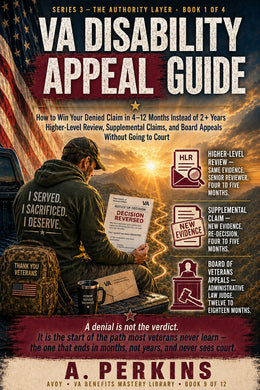
Once a denial arrives, a VSO helps decide whether to file a Supplemental Claim, request a Higher-Level Review, or go straight to the Board of Veterans Appeals — each with different timelines and different rules about new evidence. A Supplemental Claim requires new and relevant evidence and, as of mid-2026, is averaging roughly 61 days for VA to review and issue a response. A Higher-Level Review does not allow new evidence but asks a senior reviewer to take a fresh look at the same file, averaging around 148 days for a decision. A Board Appeal, filed on a Notice of Disagreement, can take anywhere from about 12 months on the Direct Review docket to well over three years on the Hearing docket, depending on which option is selected.
Matching the Evidence to the Right Lane
A VSO's core value in this stage is matching new evidence to the correct lane rather than letting a veteran default to whichever option feels fastest. If new medical evidence has surfaced since the denial, a Supplemental Claim is often the fastest path to a corrected rating. If the existing evidence was sound but VA appears to have misapplied the rating criteria, a Higher-Level Review may resolve the issue without adding a single new document. Choosing incorrectly can add months or years to an already difficult wait, which is why experienced VSOs walk through each lane's tradeoffs before a Notice of Disagreement or supplemental claim form is ever submitted.
Step-by-Step: How to Find and Appoint a VSO
Steps 1–3: Search, Verify, and Contact
- Go to VA's official accreditation search tool or the "Get help from a VA accredited representative or VSO" page on VA.gov and search by name, state, or zip code.
- Confirm current accreditation status directly in the search results — VA warns that a representative not appearing in the database is not currently authorized to represent claimants, even if they claim otherwise.
- Contact the VSO directly, either through a local county veterans service office, a state department of veterans affairs, or a national organization's regional office, to schedule an initial appointment.
Steps 4–5: Appoint and Prepare
- Complete VA Form 21-22, Appointment of Veterans Service Organization as Claimant's Representative, if working with a VSO, or VA Form 21-22a if appointing an individual attorney or claims agent. This power of attorney is required before VA can discuss the case with the representative or allow them to file on the veteran's behalf.
- Bring the C-file, STRs, private medical records, and any lay statements to the first working meeting so the VSO can immediately begin assessing which appeal lane and evidence strategy fits the case.
After You File — C&P Exam, Rating Decision, and Appeals
Once a Supplemental Claim, Higher-Level Review, or Board Appeal is filed with VSO support, VA may schedule a new Compensation and Pension (C&P) exam if the case involves a Supplemental Claim with a new medical issue. A VSO can help the veteran prepare by reviewing what the exam will and will not cover and by flagging any prior exam that appeared incomplete or inconsistent with the medical record.
Reviewing the Rating Decision With Your Representative
When the new decision arrives, a VSO can help interpret the rating decision letter, confirm the effective date matches what the evidence supports, and identify whether the reasoning cited by the rater lines up with the evidence actually submitted. This step catches errors — such as an overlooked diagnostic code or a misapplied combined rating calculation — before they require yet another appeal.
If the Appeal Is Still Denied
If VA denies the claim again, a VSO can help decide whether to escalate to the next appeal lane, request a Board hearing, or bring in an accredited attorney for a case headed toward the Court of Appeals for Veterans Claims. Because Board of Veterans Appeals timelines can run past three years on some dockets in 2026, a VSO's guidance on lane selection early in the process remains one of the most effective ways to avoid unnecessary delay.
Ready to See Where Your Case Stands?
Finding the right accredited representative is one of the most consequential decisions in a VA appeal, and it costs nothing to start. Take the free VA Claim Readiness Test at avoyvet.com to see how your evidence, timeline, and appeal lane options line up before your next appointment with a VSO.
Frequently Asked Questions
Is it really free to use a VSO for my VA appeal?
Yes. VA-recognized Veterans Service Organizations are required to provide claims and appeals assistance free of charge, regardless of the outcome. This is different from accredited attorneys and claims agents, who may charge a fee for work performed after a Notice of Disagreement is filed on an initial claim. Veterans should never pay a fee to a VSO representative for standard claim or appeal assistance, and any request for payment from someone claiming to be a VSO representative is a red flag worth reporting to VA's Office of General Counsel.
How do I know if a representative is actually VA-accredited?
Search the person's name directly in VA's official Office of General Counsel accreditation database, accessible through VA.gov. Only individuals and organizations that appear as currently accredited are authorized to formally represent a claimant before VA. If a name does not appear, VA states the person is not currently authorized to provide representation, even if an application is pending.
Can I switch VSOs in the middle of my appeal?
Yes. Veterans can revoke an existing power of attorney and appoint a new VSO, claims agent, or attorney at any point by filing an updated VA Form 21-22 or 21-22a. There is no penalty for switching representatives, though it is worth discussing the reason for the change with the current representative first in case a simpler fix is available.
Do I need a lawyer for a VA appeal, or is a VSO enough?
Many appeals, especially Supplemental Claims and Higher-Level Reviews built on solid new evidence, are handled effectively by a VSO at no cost. Veterans with complex medical disputes, cases headed toward the Board of Veterans Appeals hearing docket, or appeals likely to reach the Court of Appeals for Veterans Claims sometimes choose to add an accredited attorney, particularly since attorneys can represent veterans through federal court where VSOs generally cannot.
What documents should I bring to my first VSO appointment?
Bring a copy of the VA denial letter, the claims file (C-file) if already requested, service treatment records, private medical records tied to the condition, and any lay or buddy statements already gathered. Having these organized in advance lets the VSO spend the appointment building appeal strategy rather than tracking down basic paperwork.
How long will my appeal take even with VSO help?
Timelines depend on the lane chosen. In 2026, Supplemental Claims are averaging around 61 days, Higher-Level Reviews around 148 days, and Board of Veterans Appeals decisions ranging from roughly 12 months on the Direct Review docket to well over three years for cases requesting a hearing. A VSO cannot change VA's processing times but can help select the lane most likely to resolve the case efficiently.
Can a VSO help with claims involving PACT Act toxic exposure conditions?
Yes. VSOs are trained on current presumptive condition lists, including those added under the PACT Act for burn pit, Agent Orange, Camp Lejeune, and Gulf War exposures. A VSO can check whether a denied condition now qualifies for presumptive service connection, which can significantly shorten the evidence needed to win an appeal.
Educational information only — not legal, medical, or claim representation, and not affiliated with the U.S. Department of Veterans Affairs. For help filing or appealing, contact a VA-accredited VSO (often free), claims agent, or attorney. For current rates, forms, and deadlines, see VA.gov.