Roughly 93% of Compensation and Pension exams are now performed by outside medical contractors rather than VA staff, and a rushed or incomplete exam can turn a strong claim into a denial. Veterans often walk out of a 15-minute appointment feeling unheard, only to receive a rating decision that contradicts their treatment records or ignores a claimed condition entirely. The good news: a flawed C&P exam is not the final word. VA regulation requires that once an exam is provided, it must be adequate, and veterans have specific, time-tested tools — from a written statement to a Supplemental Claim — to correct the record and get the rating decision that actually reflects reality.
Key Takeaways
- Request a full copy of the C&P exam report as soon as the rating decision posts, either through VA.gov or by requesting the claims file.
- Identify specific errors — missed conditions, factual mistakes, or findings that contradict the medical record.
- Document every discrepancy in a personal statement filed on VA Form 21-4138.
- Strengthen the file with a private medical opinion or independent Disability Benefits Questionnaire (DBQ) before refiling.
- Choose the correct review lane — Supplemental Claim, Higher-Level Review, or Board appeal — based on the type of error involved.
- Track every deadline closely, since most challenges must be filed within one year of the decision that relied on the exam.
Table of Contents
- Who Can Challenge a C&P Exam
- Building the Evidence File to Prove the Exam Was Wrong
- Supplemental Claim vs. Higher-Level Review: Choosing the Right Lane
- Step-by-Step: How to Challenge an Inaccurate C&P Exam
- After You File: New Exams, Rating Decisions, and Further Appeals
 |
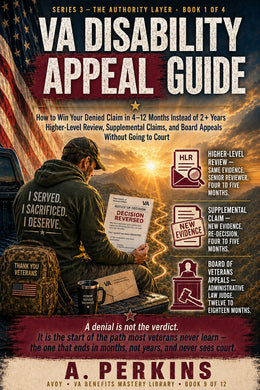
From the AVOY VA Benefits Mastery Library The VA Disability Appeal Guide covers this in full depth, with step-by-step guidance for exactly this situation. Get the Book → |
Who Can Challenge a C&P Exam
Any veteran who received a VA rating decision based on a C&P exam can challenge that exam's findings — there is no separate eligibility test beyond having an open, recently decided, or previously denied claim tied to that exam. This right applies whether the exam took place at a VA medical center or through one of the contractors now handling roughly 93% of exams nationwide: Leidos QTC Health Services, Veterans Evaluation Services (VES), Optum Serve (formerly LHI), and Loyal Source Government Services. Under longstanding VA case law, once the agency undertakes to provide a medical exam, that exam must be adequate for rating purposes — meaning it has to address every claimed condition, consider the full record, and support its conclusions with reasoning a reviewer can follow.
Veterans do not need a lawyer or accredited representative to challenge an exam, though a Veterans Service Officer (VSO) can help organize the paperwork at no cost. What matters is documenting the specific ways the exam fell short, not simply disagreeing with the outcome.
When an Exam Report Qualifies as Inadequate
Common red flags include an exam that lasted only a few minutes for a complex condition, an examiner who never reviewed the claims file or service treatment records, a report that skips one or more claimed or secondary conditions, conclusions that directly contradict private treatment notes or buddy statements already in the file, or a Disability Benefits Questionnaire (DBQ) that does not match the condition being rated. Any one of these can be enough to request review of the exam's adequacy rather than accept the resulting rating.
Building the Evidence File to Prove the Exam Was Wrong
A challenge succeeds or fails on the strength of the evidence behind it, not on how frustrated the veteran was during the appointment. The goal is to build a file that shows, point by point, where the exam diverged from the medical reality.
Service Treatment Records and Private Medical Evidence
Start with the service treatment records (STRs) and any VA or private treatment notes generated after the exam date. If a private doctor's chart notes describe symptoms the examiner's report says were absent, that contradiction is strong evidence the exam missed something. A private Disability Benefits Questionnaire, completed by a treating physician using the same VA-approved form the contractor used, carries real weight because it speaks the same clinical language the rating team is trained to evaluate.
Buddy Statements and PACT Act Presumptive Conditions
Lay statements from family, fellow service members, or coworkers describing day-to-day symptoms can fill gaps an exam missed, especially for conditions like PTSD, TBI, or chronic pain where severity fluctuates day to day. For veterans with toxic exposure claims, the PACT Act's presumptive conditions list — which has already supported more than 2.4 million approved claims since 2022 — can reduce or eliminate the need to prove service connection through the exam at all, shifting the fight to rating severity rather than eligibility.
Supplemental Claim vs. Higher-Level Review: Choosing the Right Lane
VA gives veterans three main paths after a decision built on a flawed exam: a Supplemental Claim, a Higher-Level Review, or a Notice of Disagreement to the Board of Veterans' Appeals. Picking the right one depends on whether new evidence exists or whether the existing record was simply misread.
When Each Lane Makes Sense
A Supplemental Claim (VA Form 20-0995) is the right choice when there is new and relevant evidence to submit — a private DBQ, updated treatment records, or a buddy statement the exam never considered. As of early 2026, supplemental claims have been averaging around 60 to 75 days for a decision. A Higher-Level Review (VA Form 20-0996) fits when no new evidence is needed but the existing exam and record were misapplied — for example, the rater ignored evidence already in the file. Higher-Level Reviews are also averaging roughly 60 to 75 days against VA's 125-day goal in 2026. If both lanes fail, a Notice of Disagreement sends the case to the Board of Veterans' Appeals, where the direct docket currently runs around 212 days for a decision.
Step-by-Step: How to Challenge an Inaccurate C&P Exam
Steps 1–3: Get the Report and Document the Problems
- Request the full exam report and claims file. Download the decision letter and exam report through VA.gov, or submit a request for the claims file (C-file) if more detail is needed.
- Write a detailed personal statement. Use VA Form 21-4138 to describe exactly what happened at the exam, what the examiner did or did not do, and how the report's conclusions conflict with the medical record.
- Gather independent evidence. Request a private DBQ from a treating provider, collect buddy statements, and pull any treatment records created after the exam date.
Steps 4–5: File and Track
- File the correct review. Submit a Supplemental Claim (Form 20-0995) with new evidence, a Higher-Level Review (Form 20-0996) if no new evidence is needed, or a Notice of Disagreement (Form 10182) to escalate to the Board.
- Track the claim and respond quickly. Monitor status on VA.gov and respond to any development letters within the stated deadline to avoid delays.
After You File: New Exams, Rating Decisions, and Further Appeals
What Happens During the Review
Once a Supplemental Claim or Higher-Level Review is filed, VA may schedule a new C&P exam if the reviewer determines the original one was inadequate, or a Higher-Level Review claims adjudicator may simply re-weigh the existing record without a new exam. VA's overall claims processing accuracy has climbed above 94% in 2026, and the average time to a decision across all original claims has fallen to roughly 78.6 days — both signs that a well-documented challenge has a real chance of a faster, corrected outcome.
If You're Still Denied
If the new decision is still unfavorable, veterans can escalate to the Board of Veterans' Appeals through a Notice of Disagreement, or, in narrow circumstances where a final decision contained an obvious factual or legal error, raise a claim of clear and unmistakable error (CUE). A VSO, claims agent, or attorney can help determine which path fits the specific denial reason.
An inaccurate C&P exam does not have to be the end of a claim. The free VA Claim Readiness Test at avoyvet.com walks veterans through the same evidence checklist used in this guide, helping identify exactly what's missing before filing a Supplemental Claim, Higher-Level Review, or appeal. It takes about 60 seconds and gives a clear next step based on the specific claim situation.
Frequently Asked Questions
How do I get a copy of my C&P exam report?
The exam report is typically included with the rating decision letter, which veterans can download from VA.gov under the claim status page. If it is not attached, veterans can request their full claims file (C-file), which contains the exam report along with every piece of evidence VA considered. Reviewing the report line by line against personal medical history is the fastest way to spot factual errors, missed conditions, or conclusions that do not match the record. This step should happen as soon as the decision posts, since review deadlines for Supplemental Claims and Higher-Level Reviews typically run one year from the decision date.
Can I request a new C&P exam if I disagree with the first one?
Veterans cannot directly demand a new exam, but requesting one is a normal part of a Supplemental Claim or Higher-Level Review when the evidence shows the original exam was inadequate. If a reviewer agrees the exam did not meet VA's adequacy standard — for example, it failed to address a claimed condition or contradicted the existing medical record — VA will typically schedule a new exam with a different contractor or examiner before issuing a new decision. Documenting specific, evidence-backed problems with the first exam makes this outcome far more likely than a general statement of disagreement.
What's the difference between challenging the exam and filing a full appeal?
Challenging the exam is usually the first step inside a broader review process, not a separate action. In practice, veterans challenge the exam by filing a Supplemental Claim, Higher-Level Review, or Notice of Disagreement and using that filing to explain exactly what was wrong with the exam and attach supporting evidence. There is no standalone form that only disputes an exam; the challenge has to be routed through one of VA's three formal review lanes, each with its own evidence rules, timeline, and level of review.
Does a bad C&P exam automatically mean my claim will be denied?
Not necessarily. Raters consider the exam alongside service treatment records, private medical evidence, and lay statements already in the file, so a flawed exam does not automatically doom a claim if strong supporting evidence exists elsewhere. That said, the exam often carries significant weight in the final decision, which is why documenting problems immediately and submitting independent medical evidence, such as a private DBQ, gives the strongest chance of a corrected rating on review.
Can I bring someone to my C&P exam or record it?
Veterans are generally permitted to bring a family member, friend, or VSO representative to a C&P exam as a witness, though that person typically cannot answer questions on the veteran's behalf. Recording policies vary by contractor and examiner, so veterans who want to record an exam should ask in advance and get confirmation in writing when possible. Having a witness present can be valuable evidence later if the exam report describes the appointment differently than what actually happened.
What if the examiner didn't address a secondary condition?
If a claimed secondary condition was left out of the exam entirely, that is one of the clearest grounds for a Supplemental Claim or Higher-Level Review, since VA is required to address every condition claimed. Veterans should specifically flag the missing condition in their personal statement and, where possible, submit private medical evidence or a buddy statement describing that condition's connection to the already-service-connected disability. A missed secondary condition often gets faster resolution than a disputed rating percentage, since it is a more straightforward, documentable gap.
How long do I have to challenge a C&P exam-based decision?
Veterans generally have one year from the date of the rating decision to file a Supplemental Claim, Higher-Level Review, or Notice of Disagreement while preserving the original effective date and any back pay tied to it. Filing after that window is still possible in many cases, but it may result in a new, later effective date rather than one tied back to the original claim. Because of this, veterans who suspect an exam was inadequate should request the report and begin building their evidence file as soon as the decision letter arrives rather than waiting.
Educational information only — not legal, medical, or claim representation, and not affiliated with the U.S. Department of Veterans Affairs. For help filing or appealing, contact a VA-accredited VSO (often free), claims agent, or attorney. For current rates, forms, and deadlines, see VA.gov.