Denied for PTSD, TBI, or chronic pain because no doctor was in the room to see it happen? VA supplemental claims filed with new evidence now average 60 to 75 days for review, well inside VA's own 125-day goal, and a well-written buddy statement is often the single piece of new evidence that turns a denial around. VA Form 21-10210, the "Lay/Witness Statement," lets a spouse, fellow service member, or friend put their firsthand account on the record in the exact format VA raters expect to see. This guide breaks down who can write one, what belongs in it, and how to attach it to a supplemental claim, Notice of Disagreement, or Board appeal so it actually gets weighed as evidence.
Key Takeaways
- Identify who is eligible to write a buddy statement for the appeal, since spouses, fellow veterans, coworkers, and family members can all qualify as competent witnesses.
- Use VA Form 21-10210 instead of an informal letter, since it is the form VA specifically built to receive lay and witness evidence since 2021.
- Focus each statement on firsthand, dated, specific observations rather than opinions about diagnosis or medical causation.
- Pair the buddy statement with the right appeal type, whether that is a Supplemental Claim, Higher-Level Review, or Notice of Disagreement to the Board.
- Cross-check names, dates, and locations against service treatment records and prior statements before submission to avoid credibility gaps.
- Submit a separate Form 21-10210 for each witness rather than combining multiple accounts on one form.
Table of Contents
- Who Can Write a Buddy Statement and When It Qualifies as Evidence
- Gathering the Right Evidence Before You Write
- Filing Strategy: Where a Buddy Statement Fits in Your Appeal
- Step-by-Step: Writing and Submitting VA Form 21-10210
- After You Submit: What Happens to a Buddy Statement During Review
- Frequently Asked Questions
 |
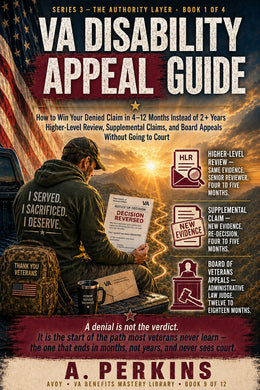
From the AVOY VA Benefits Mastery Library The VA Disability Appeal Guide covers this in full depth, with step-by-step guidance for exactly this situation. Get the Book → |
Who Can Write a Buddy Statement and When It Qualifies as Evidence
The VA pain point here is real: veterans assume only a doctor's note counts as evidence, so they skip an available witness entirely and file an appeal with nothing but their own word against the denial. That assumption is wrong. Under 38 CFR 3.159(a)(1), lay evidence is competent when the person has personal knowledge of the facts they are describing and the capacity to observe and report them accurately. A spouse who watched a veteran wake up screaming every night for a decade is a competent witness to that fact, even though they cannot diagnose PTSD.
VA Form 21-10210 can be completed by a spouse, relative, friend, coworker, fellow service member, or, in limited cases, the veteran describing another veteran's claim. The form was introduced in 2021 as VA's preferred replacement for the older Form 21-4138 specifically for buddy and witness statements, and it carries the certification language built in, so the witness only needs to sign and date it.
What Counts as Competent Lay Evidence
Lay witnesses can testify to anything a layperson can observe without medical training: visible limping, sleep disturbance, personality or behavioral changes, missed work, panic in crowds, or physical limitations during daily tasks. What a buddy statement cannot do is diagnose a condition or state that an injury medically caused a current disability. That connection, called the nexus, generally still needs a medical opinion or nexus letter. A buddy statement supplies the observable "what happened" and "what it looks like now." A nexus letter supplies the medical "why." Strong appeals almost always pair both.
Gathering the Right Evidence Before You Write
Before a single word is written, the evidence needs to line up. A common pain point is that a buddy statement describes something that flatly contradicts the veteran's service treatment records or an earlier personal statement, and that mismatch becomes the reason VA discounts the whole file rather than the reason it approves the claim. VA's own standard under 38 CFR 3.2501 requires evidence submitted with a supplemental claim to be both "new," meaning not previously submitted, and "relevant," meaning it could reasonably affect the outcome; a buddy statement that merely repeats what is already in the file does not meet that bar.
Cross-Check Against Service and Medical Records
Pull the veteran's service treatment records, any private medical records, and every statement already in the claims file before drafting. The witness should confirm the unit, dates, and duty station named in the statement match what is already on record. If the buddy statement describes an event that happened at a different base or in a different year than the service records show, VA raters are trained to flag the inconsistency, and it can weaken otherwise strong lay evidence.
When Multiple Buddy Statements Strengthen a PACT Act or Presumptive Claim
For claims involving PTSD, traumatic brain injury, military sexual trauma, or toxic exposure under the PACT Act, medical documentation from the time of service is often thin or nonexistent. In these cases, multiple witnesses describing the same in-service event or the same pattern of symptoms from independent vantage points carry real weight, since VA gets several first-hand accounts of the same underlying facts rather than one person's memory alone. Each witness should still complete a separate Form 21-10210 describing only what they personally observed.
Filing Strategy: Where a Buddy Statement Fits in Your Appeal
The pain point at this stage is timing: veterans often write a strong buddy statement and then attach it to the wrong review track, where it either gets ignored or triggers a longer wait than necessary. VA's decision review system offers three main paths after a denial: a Supplemental Claim (Form 20-0995), a Higher-Level Review, and a Notice of Disagreement to the Board of Veterans' Appeals. A buddy statement, because it is new evidence, generally belongs with a Supplemental Claim or a Board appeal on the Evidence Submission docket. Higher-Level Review does not allow new evidence at all, since it is a review of the existing record by a senior rater.
New and Relevant Evidence Under 38 CFR 3.2501
For a Supplemental Claim, the buddy statement must satisfy the "new and relevant" standard: it cannot be something VA already reviewed, and it must have a reasonable chance of affecting the decision. As of early 2026, supplemental claims filed with well-organized new evidence have been processing in roughly 60 to 75 days on average, notably faster than the VA's own 125-day target. That speed advantage is one reason a well-documented buddy statement, paired with a Supplemental Claim, is often faster than waiting on a Board appeal.
Step-by-Step: Writing and Submitting VA Form 21-10210
- Download VA Form 21-10210 from VA.gov and confirm the veteran's name and VA file number are entered exactly as they appear on prior correspondence.
- Have the witness complete Section I with their own identifying information: name, address, phone number, and their relationship to the veteran.
- In the statement section, write specific, dated observations in the witness's own words rather than legal or medical language borrowed from the internet.
- Attach additional pages if the account needs more room, labeling every page with the veteran's name and VA file number so nothing gets separated in processing.
- Sign, date, and submit the form alongside the Supplemental Claim, Notice of Disagreement, or additional evidence packet for the relevant appeal.
What to Include in Each Section
The written statement should answer four questions in plain language: what did the witness see or experience, when and where did it happen, how often has the witness observed it, and how does it affect the veteran's daily life or work today. A single concrete example, such as a specific deployment incident followed by a description of how the veteran has behaved differently since, carries far more weight than a general statement like "he was never the same after the war."
Common Mistakes That Get Buddy Statements Discounted
The most frequent mistakes are vague timeframes, statements copied nearly word-for-word from a template found online, and claims that stray into medical opinion the witness is not qualified to give. A statement that says "I believe his PTSD was caused by his deployment" oversteps what a lay witness can competently testify to. A statement that says "I served with him from 2009 to 2011 and saw him flinch at loud noises every day after we returned" stays inside competent lay evidence and reads as credible.
After You Submit: What Happens to a Buddy Statement During Review
Once submitted, the buddy statement becomes part of the claims file a rater reviews alongside service records, medical evidence, and any Compensation and Pension exam findings. The pain point many veterans hit here is assuming the statement alone guarantees approval; in reality, it is weighed as one piece of the overall evidence picture, not a standalone deciding factor.
How Raters Weigh Lay Evidence
Raters assess buddy statements for internal consistency, consistency with the rest of the file, and specificity. A 2021-introduced, VA-standardized form with built-in certification language, like Form 21-10210, is processed the same way as any other evidence: it does not automatically outweigh a C&P exam finding, but it can fill a gap the exam cannot reach, particularly for symptoms that come and go or that a one-time examiner never witnessed.
If the Buddy Statement Isn't Enough
If a claim is still denied after a buddy statement is submitted, the next evidence to gather is usually a nexus letter addressing medical causation directly, since the buddy statement cannot do that job on its own. From there, a veteran can file a new Supplemental Claim with the added nexus letter, or proceed to a Notice of Disagreement for Board review if the evidence picture is already complete.
Get a Clear Next Step
Deciding whether a buddy statement, a nexus letter, or a different appeal track fits a specific denial can be confusing to sort out alone. The Free VA Claim Readiness Test at avoyvet.com walks through the claim or appeal details and points to the next concrete step, whether that is gathering lay evidence, requesting records, or filing a specific form. It takes a few minutes and is built specifically around the evidence and appeal questions veterans ask most.
Frequently Asked Questions
Can a family member write a VA buddy statement, or does it have to be a fellow veteran?
A family member can absolutely write a buddy statement. Spouses, parents, siblings, and children are all considered competent witnesses when they have personally observed the facts described, such as changes in behavior, sleep, mood, or physical limitations since the veteran's service. The witness does not need military experience to describe what they have seen at home. What matters is that the observations are firsthand and specific, not secondhand accounts of what the veteran told them happened during service, which is a different category of evidence. A fellow service member's statement is especially valuable for describing an in-service event itself, while a family member's statement is often stronger for describing how a condition has affected daily life in the years since separation.
Is VA Form 21-10210 required, or can a buddy statement be submitted as a regular letter?
VA Form 21-10210 is the form VA specifically built for lay and witness statements and is strongly recommended, though it replaced the older Form 21-4138 in 2021 rather than making informal letters automatically invalid. Using the official form matters because it includes the certification language VA requires and prompts the witness for the specific identifying details raters look for. An unstructured letter can still be considered as lay evidence, but it risks missing required elements like the veteran's VA file number or a proper signature and date. For anything going into an appeal, using Form 21-10210 removes that risk.
How many buddy statements should be submitted for one appeal?
There is no fixed number, and quality matters more than quantity. One highly specific, detailed statement from someone who observed the relevant events repeatedly over time is generally worth more than several vague statements. That said, for claims involving PTSD, military sexual trauma, or in-service events with little contemporaneous documentation, two or three independent witnesses describing the same event or symptom pattern from different vantage points can meaningfully strengthen the file, since VA is looking at corroboration from multiple sources rather than one account.
Can a buddy statement help with a PACT Act toxic exposure claim?
Yes. Many PACT Act presumptive conditions still require evidence that the veteran was present in a qualifying location or exposed under qualifying circumstances, and a buddy statement from someone who served alongside the veteran can help establish exposure circumstances that might not appear in incomplete or destroyed service records. For symptoms that developed gradually, such as respiratory issues tied to burn pit exposure, a buddy statement describing when symptoms first became noticeable can also support the timeline VA needs to evaluate the claim.
Does a buddy statement replace the need for a nexus letter?
No. A buddy statement and a nexus letter serve different, complementary purposes. The buddy statement documents what happened and what a witness has observed since; it cannot offer a medical opinion connecting a current condition to military service. A nexus letter, typically written by a medical professional, provides that missing medical link. For claims where causation is contested, both pieces of evidence are often necessary, and submitting one without the other frequently leaves a gap in the file that leads to another denial.
Where should a buddy statement be submitted: with the original claim or the appeal?
A buddy statement can be submitted at either stage, but if it was not part of the original claims file, it needs to be filed as new evidence with a Supplemental Claim or as part of a Notice of Disagreement evidence submission to the Board. Higher-Level Review does not accept new evidence, since it is limited to a fresh look at the evidence already in the file by a more senior reviewer. Submitting a buddy statement to the wrong review track means it may not be considered at all, so confirming the right appeal type before submission matters as much as the content of the statement itself.
What happens if a buddy statement contains an error, like a wrong date?
Minor errors can undermine an otherwise strong statement, since raters weigh consistency heavily when assessing credibility. If an error is discovered before submission, the witness should redo the statement with corrected information rather than submitting something with a known inaccuracy. If an error is discovered after submission, a corrected statement can be submitted as an additional piece of evidence, ideally with a brief explanation of the correction. Cross-checking names, unit designations, and dates against service records before submission is the most reliable way to avoid this problem entirely.
Educational information only — not legal, medical, or claim representation, and not affiliated with the U.S. Department of Veterans Affairs. For help filing or appealing, contact a VA-accredited VSO (often free), claims agent, or attorney. For current rates, forms, and deadlines, see VA.gov.