Two bills introduced in the Senate this week would change one of the most punishing — and least understood — rules in the VA disability system: recoupment, the practice of withholding your entire monthly disability check to pay back separation pay you received years or even decades ago.
If you've ever gotten a letter from VA saying your compensation is being held back because of money you were paid on your way out of the military, this is for you. If you haven't gotten that letter yet but took separation pay, special separation benefits, or disability severance pay when you left service, this is for you too — because you may not find out until your first award letter arrives with a $0 balance.
The Problem: VA Can Take 100% of Your Check Until the Debt Is Paid
Here's the part most veterans never hear about until it happens to them.
Under current law (10 U.S.C. § 1174(h)(2) and 38 CFR 3.700), if you received separation pay, special separation benefits, or disability severance pay when you left the military — and you're later approved for VA disability compensation — VA is required to recoup that money. Not a portion of it. Not a payment plan you agree to. VA withholds your entire monthly disability check until the after-tax amount of what you were paid is fully recovered.
For separations after September 30, 1996, VA recoups the amount you received minus the federal taxes withheld from it. For separations before that date, VA recoups the full gross amount — before taxes.
Do the math on that: a veteran rated 60% with no dependents receives roughly $1,435 a month in 2026. If that veteran took $30,000 in after-tax separation pay, VA can withhold every dollar of that monthly check for close to two years before payments resume.
And here's the part that makes this a genuine crisis for some veterans: this can happen decades after you left service. Military Times reported this week on a retired Air Force major who received $30,000 in separation pay back in 1990 — and got a letter in 2024, 34 years later, informing him his entire disability check would be withheld until it was repaid. He told Military.com at the time the surprise threatened his housing and his vehicle. That's not a hypothetical. That's on record.
The scale of this is bigger than most veterans realize. According to VA's own data, the department recouped $2.44 billion in separation pay and bonuses from 112,834 veterans between 2013 and 2023. Recoupment peaked in 2018, when more than 17,000 veterans paid back over $396 million in a single year.
What's Actually New This Week
On August 6, 2026, Sen. Ruben Gallego (D-Ariz.), a former Marine and Iraq War veteran, introduced the Restore Veterans Compensation Act. Gallego and Rep. Gus Bilirakis (R-Fla.) tried this once before, in 2022, and it never made it out of committee. The bill would bar VA from recouping voluntary or involuntary separation pay from veterans approved for disability compensation, and it would let veterans who later qualify for military retirement pay repay the net amount they actually received — not the gross, pre-tax amount.
A day earlier, on August 5, Sen. James Risch (R-Idaho) introduced a separate bill, the Veterans Earned Benefits Access Act, which takes a different approach: instead of eliminating recoupment, it would cap the monthly withholding at no more than 25% of a veteran's disability compensation check, instead of the current practice of withholding the full amount.
Here's the current picture side by side with what each bill proposes:
| Rule | Current Law | Gallego Bill (Restore Veterans Compensation Act) | Risch Bill (Veterans Earned Benefits Access Act) |
|---|---|---|---|
| Monthly amount VA can withhold | Up to 100% of your disability check | Recoupment eliminated for veterans approved for disability compensation | Capped at 25% of your monthly disability check |
| Amount owed back | Net (after-tax) amount for post-1996 separations; gross for pre-1996 | Net amount only, for veterans who later qualify for retirement pay | Not addressed — focuses on the monthly withholding cap |
| Status as of this post | In effect now | Introduced Aug. 6, 2026 — not law | Introduced Aug. 5, 2026 — not law |
Neither bill has passed. Neither is law. If you're dealing with recoupment right now, today's rules — 100% withholding, net-or-gross depending on your separation date — are still the rules that apply to you. That's exactly why organizing your paperwork now, instead of waiting to see what Congress does, matters.
The AVOY System: Don't Let This Surprise You
This is a textbook case for why we teach veterans to organize before you file instead of filing and finding out later. Here's how to apply that here:
1. Check your DD-214 for separation pay codes before you file a new claim. If you received Separation Pay, Special Separation Benefit (SSB), Voluntary Separation Incentive (VSI), or disability severance pay when you left service, that shows up on your separation paperwork. Know it going in — don't let it show up as a surprise in your first award letter.
2. Ask VA directly whether recoupment applies to you before you assume it doesn't. Recoupment isn't always obvious from the outside, and it doesn't disqualify you from filing — it only affects when your payments start flowing at full amount. A veteran who assumes "I'll finally get paid" without checking can be blindsided by a $0 check on award day.
3. If you're already in a recoupment period, get the exact payoff figure in writing from VA. Don't rely on your own math. Request a written statement of the remaining balance and the after-tax amount VA is applying — this is the same "organize your paper trail" discipline we teach for every claim.
4. Watch these two bills, but don't wait on them. Neither has moved out of committee, and Gallego's identical version died in committee back in 2022. File your claim, calculate your recoupment exposure under today's rules, and treat any future law change as a bonus — not a plan.
5. If your separation was combat-related, ask a VA-accredited VSO whether an exception applies to your specific pay type. Recoupment rules interact differently with disability severance pay versus voluntary separation pay, and a Veterans Service Officer can confirm which category you fall into at no cost to you.
The Access Point
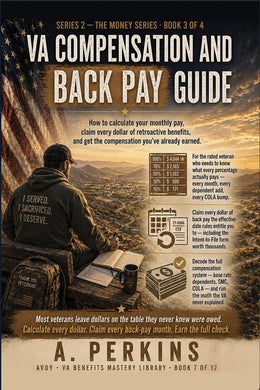
Recoupment sits at the exact intersection of two things every veteran needs to understand before they file: what VA owes you, and how VA calculates it. That's the whole subject of our book VA Compensation and Back Pay Guide — how to calculate your monthly pay, claim every dollar of retroactive back pay you're owed, and understand exactly what VA can and can't withhold.

VA Compensation and Back Pay Guide
Know what you're owed. Collect what you've earned.
Get the Book →Before you file — or if you're already navigating a recoupment period — grab our free Claims Roadmap. It walks you through exactly how to organize your paperwork, including separation pay documentation, before you submit anything to VA.
Have a specific question about your own separation pay, recoupment balance, or how these bills might apply to your situation? Ask AVOY Veteran Navigator AI™ for plain-English educational guidance, available any time.
Frequently Asked Questions
Does taking separation pay disqualify me from VA disability compensation?
No. You're still eligible to file and be rated. Separation pay only affects the timing and amount of your monthly payments while VA recoups what you were paid — it does not disqualify your claim.
How much of my disability check can VA currently withhold?
Under current law, VA can withhold up to 100% of your monthly disability compensation until the after-tax amount of your separation pay is fully recovered. Neither the Gallego bill nor the Risch bill has passed, so this remains the rule today.
Is recoupment the full amount I received, or the after-tax amount?
For separations after September 30, 1996, VA recoups the amount minus federal taxes withheld at the time. For separations before October 1, 1996, VA recoups the full gross amount.
Will these new Senate bills become law?
Unknown. Gallego and Bilirakis introduced a nearly identical bill in 2022 that never advanced out of committee. Both the Restore Veterans Compensation Act and the Veterans Earned Benefits Access Act were introduced August 5–6, 2026, and have a long path through committee and floor votes ahead of them.
What should I do if I already got a recoupment letter?
Request a written statement from VA showing the exact remaining balance and how it was calculated, and consider consulting a VA-accredited Veterans Service Officer — their help is free — to confirm your recoupment figure is accurate for your separation type and date.
Related Reading
- VA Back Pay & Effective Dates: How to Calculate What VA Owes You
- How VA Math Really Works: Why 50% + 30% Isn't 80%
- How to Read Your VA Decision Letter (Line by Line)
This article is for educational purposes only and does not constitute legal, medical, or financial advice, nor does it represent your VA claim. AVOY is not affiliated with or endorsed by the Department of Veterans Affairs. Filing a VA claim is always free, and a VA-accredited Veterans Service Officer (VSO) can help you at no cost. In crisis? Dial 988, then press 1.
Source: Patricia Kime, "Senator introduces bill to stop VA from recouping military separation pay from disabled vets," Military Times, published Aug. 6, 2026.