Published September 17, 2026 · Educational summary written in plain language by A. Perkins.
On Tuesday, September 15, 2026, a discharge petition to force a House floor vote on the Major Richard Star Act reached the 218 signatures it needs. Rep. Nancy Mace of South Carolina provided the last one. Stars and Stripes reported the milestone on September 16.
If you were medically retired from the military with fewer than 20 years of service, and you draw VA disability compensation for a combat injury, this is the bill about your paycheck. It has been stuck for years. It just moved.
It also, honestly, did not move as far as the headlines make it sound. Below is what actually happened, what it would change, why nothing happens before November — and the one thing in this story you can act on today without waiting on Congress at all.
The Problem: the "wounded warrior tax" takes with one hand what it gives with the other
Here is the rule almost nobody explains until it hits their bank account.
If you were medically retired under Chapter 61 with fewer than 20 years of service, you can be entitled to two separate things at once: military retired pay from the Department of Defense, and VA disability compensation from the Department of Veterans Affairs. They come from different agencies, for different reasons. Retired pay is for your service. VA compensation is for your disability.
But under current law, you generally cannot keep both in full. Your military retired pay is reduced dollar for dollar by the amount of VA compensation you receive. Get $1,800 a month from VA, and $1,800 comes off your retired pay. You are not being paid twice. You are being paid once, and the government is choosing which pocket it comes out of.
Veterans advocates call it the wounded warrior tax. It affects roughly 59,000 combat-injured Veterans.
Here is the part that makes people angriest when they learn it: Veterans who retired with 20 or more years and are rated 50% or higher already escaped this. They receive Concurrent Retirement and Disability Pay, which lets them draw both without the offset. Congress fixed it for that group back in 2004. The group left behind is the one that got hurt badly enough to be medically separated before they could finish 20 years — in other words, often the most severely injured.
The Major Richard Star Act would end the offset for combat-injured Veterans regardless of how many years they served.
What Actually Happened This Week
A discharge petition is a rare parliamentary tool. When House leadership refuses to bring a bill to the floor, 218 members — a majority — can sign a petition that drags it out of committee and onto the floor anyway, over leadership objections.
Every House Democrat signed. Five Republicans crossed over to join them: Nancy Mace of South Carolina, Jeff Van Drew of New Jersey, Thomas Massie of Kentucky, Brian Fitzpatrick of Pennsylvania, and Anna Paulina Luna of Florida. Mace signed 218th.
The bill itself is not unpopular — it has 340 co-sponsors. The obstacle has always been the price tag. The Congressional Budget Office originally scored it above $10 billion over a decade. CBO has since revised that sharply upward, to more than $78 billion from 2026 through 2036. Republican leaders have pointed to that number as the reason the bill has not been given floor time.
Now the Cold Water: no vote before November
Reaching 218 signatures does not schedule a vote. It clears the path to one.
House leadership shortened the legislative calendar this week and sent members home Wednesday for a break ahead of the midterm elections. The procedural steps that follow a completed discharge petition, and any actual floor vote, are not expected until at least November. After that, the bill would still need to pass the House, pass the Senate — where it has been blocked before — and be signed.
There is one more complication worth knowing. House Republicans, led by Rep. Mike Bost of Illinois, had proposed funding the Star Act inside the Take Care of America's Veterans Act, a package of 62 veterans bills. That package would have paid for it partly by cutting future tinnitus and sleep apnea claims. It was pulled before a vote after lawmakers and several Veteran service organizations objected to funding one group of disabled Veterans by reducing benefits for another. So the money question that stalled the Star Act in the first place is still unanswered.
Translation for your household budget: nothing about your retired pay or your VA compensation changes today. Do not restructure anything around this bill. Do not let anyone sell you a service based on it.
The AVOY System: what to do this week instead of waiting
This is where most coverage stops. It should not. There is an existing benefit — already law, already funded, already paying people — that a large share of the Veterans this bill is written for have never applied for.
It is called Combat-Related Special Compensation (CRSC).
CRSC restores pay that was lost to the offset, specifically for disabilities that are combat-related. It is tax-free. It is paid monthly by DFAS. And critically: Chapter 61 medical retirees with fewer than 20 years of service are eligible. The 2008 National Defense Authorization Act opened it to exactly this group.
Here is the honest limitation, because you deserve the whole picture: for a Chapter 61 retiree under 20 years, CRSC is capped. Your payment is reduced by the amount your disability retired pay exceeds what a regular length-of-service retirement would have paid — roughly 2.5% times your years of service times your pay base. So CRSC usually does not make you whole the way the Star Act would. But "not whole" and "nothing" are very different numbers, and a lot of Veterans in this group are currently collecting the second one.
Four steps, in order
1. Pull your Retiree Account Statement (RAS) and confirm the offset is real. Log into myPay. Look for the VA waiver line. Some Veterans assume they are being offset and are not; others have no idea it has been happening for years. Do not guess at your own numbers — read them.
2. Check whether your disability is combat-related. CRSC is not for every service-connected condition. It covers disabilities resulting from armed conflict, hazardous service, conditions simulating war (including training), or an instrumentality of war. A knee destroyed in a live-fire exercise can qualify. Note this is a different standard than service connection — a condition VA already service-connected still has to be separately shown to be combat-related.
3. Apply through your branch, not through VA. This is the single most common mistake. CRSC is a Department of Defense program. You file DD Form 2860 with your own service branch's CRSC board — Army, Navy, Air Force, Marine Corps or Coast Guard. VA cannot process it and will not do it for you.
4. Document the causal link, in writing. Medical and TERA retirees have to show a causal connection between the current VA-rated disability and a combat-related event. That means the incident report, the line-of-duty determination, the deployment orders, the award citation, the buddy statements. A CRSC packet lives or dies on this, and it is the same evidence discipline that decides VA claims.
One more thing while you are in there: if your VA rating is wrong, everything downstream is wrong too — CRSC, the offset amount, and whatever the Star Act might eventually pay. Fixing an underrated condition or filing a missed secondary is work that pays off no matter what Congress does in November.
Related reading from AVOY
- VA Disability and Social Security Disability: 2026 Rules — how two federal benefits stack, and where they do not
- VA SMC Levels Explained: Compensation Above 100% — the payments most Veterans never hear about
- New Executive Order Sends Your Military Records to VA Automatically — what it speeds up, and the three things it does not fix
The Access Point
Start with the free guide, then get your specific question answered.
Get the Free VA Claims Roadmap → Ask AVOY Navigator AI™ →

Recommended Book
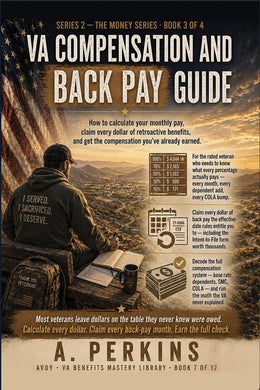
VA Compensation and Back Pay Guide — Series 2, Book 3
Offsets, effective dates, back pay, and how the dollar amount on your award letter is actually built. If money is the part of your claim you have never fully understood, start here.
Get the Book →Quick answers
Did the Major Richard Star Act pass? No. A discharge petition reached the 218 signatures needed to force a House floor vote. The bill has not been voted on, has not passed the House or Senate, and is not law.
When is the vote? Not before November 2026. The House left for a break ahead of the midterm elections.
Who would it help? Combat-injured Veterans whose military retired pay is currently reduced dollar for dollar by their VA disability compensation — primarily those medically retired with fewer than 20 years of service. Roughly 59,000 Veterans.
I have 20+ years and a 50% rating. Does this affect me? Generally no. That group already receives Concurrent Retirement and Disability Pay and is not subject to the offset.
Can I get CRSC right now? If you are a military retiree, have a VA rating of at least 10% for a combat-related disability, and your retired pay is being reduced by VA compensation, you can apply today using DD Form 2860 through your service branch. Chapter 61 retirees under 20 years are eligible, with a cap on the amount.
Does applying for CRSC cost anything? No. Filing is free, and a VA-accredited VSO can help you at no cost.
Source: Stars and Stripes, "Petition to force vote on Major Richard Star Act hits signature target," September 16, 2026; U.S. House Clerk discharge petition record; Congressional Budget Office cost estimate; Department of Defense CRSC program guidance and 10 U.S.C. § 1413a.
Educational information only — not legal, medical, or financial advice or claim representation. AVOY is not affiliated with or endorsed by the U.S. Department of Veterans Affairs. Filing for VA benefits is free, and a VA-accredited VSO can help you at no cost. Always verify current rules, rates, deadlines and eligibility at VA.gov. In crisis? Dial 988, then press 1.